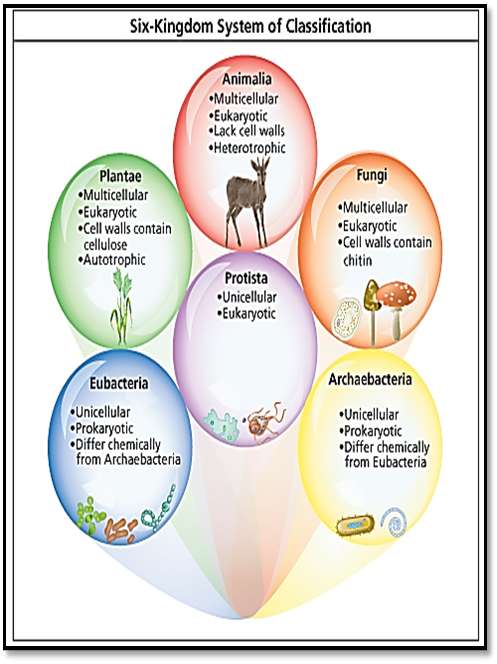
 gives rise to six, not five kingdoms of life
gives rise to six, not five kingdoms of life
"My claim is that all nucleated organisms (protoctista, plants, fungi, and animals) arose by cyanogenesis when Archaebacteria fused with ancestors of centriole-kinetosomes in the evolution of the ultimate protoctista ancestor : the nucleated cell."
Lynn Margulis, pp. 42-43.
"The bacteria known as spirochetes." were forerunners of flagella in motile cells
"The central idea is that extra genes in the cytoplasm of animal, plant, and other nucleated cells are not 'naked genes': rather they originated as bacterial genes."
page 37.
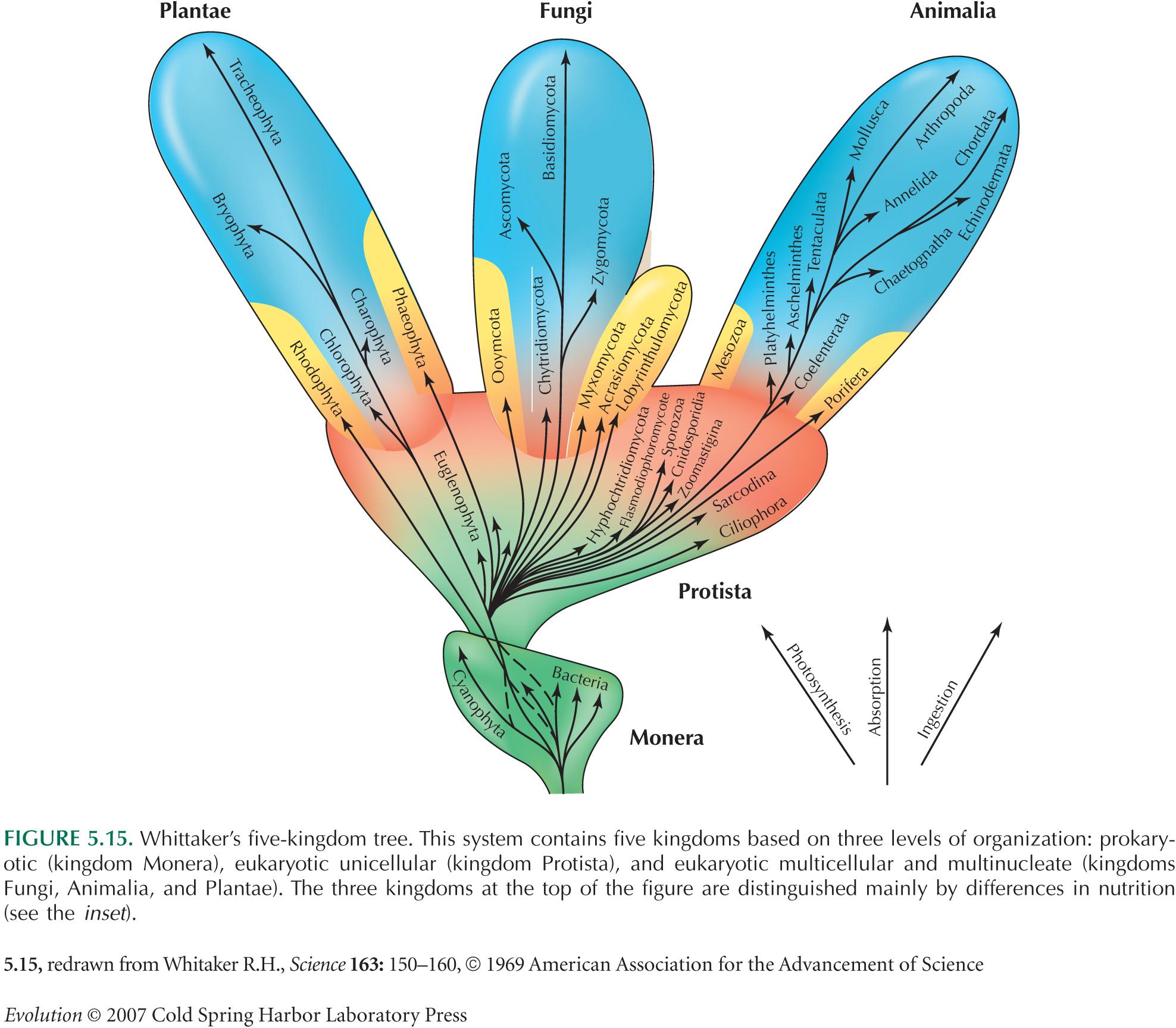
Protoctista and protists are the same group of organisms or one of these five (now six) kingdoms into which biologists now divide life.
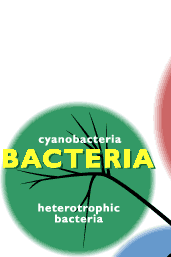
Bacteria are smaller and have less extensive genomes than do other creatures.
Bacteria do things (function) that other creatures cannot do, such as take nitrogen out of the air an make it into a soluble form, that is a form used by other forms of life.
The number of bacteria in the human body outnumber our cells!

 |
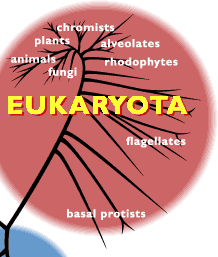 |
Humans, animals, and plants are Eukaryota. |
|---|---|---|
 |
||
|
||
"Speciation was the key to contemporary biology" Ernst Mayr said to me on a visit to his Bedford residence. This is in contrast to Garrett Hardin who suggested to me before his death that the most important concept to convey in biology is resistance, or the acquisition through natural selection of an immunity to the threats from the surrounding world. Yet these two concepts are closely related to the enormous variability that is evident in every species in the living the world."

Margulis argues that we can discover in genes, the great sources of variability in living creatures, the clue of clues to multiple changes in the past that created the world we now experience.
"The genes are a palpable legacy of a violent, competitive, and truce-forming past. Bacteria, long ago, which were partially devoured and trapped inside the bodies of others, became organelles."
"Cyanobacteria are a wildly successful form of life.
"The reason the the early plant geneticists discovered genes in the chloroplasts of plant cells is that they are always there. Little green descendants of cyanobacteria are in every plant cell at all times."
p. 37.
"Some are chloroplasts , the green parts of algal and plant cells. Others live in leaf cavities, root layers, or stem glands of green plants.
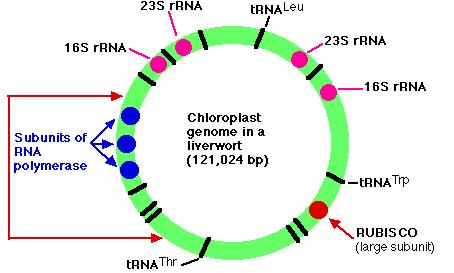
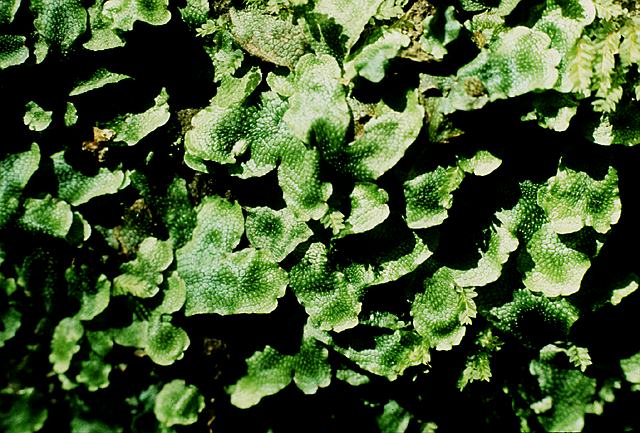
What is a liverwort?
One group of a really old lineage of simply organized, green plants.
"Liverworts belong to a group of plants, called the Bryophyta, which also includes the mosses. Neither mosses nor liverworts possess true roots and both require water to enable the male gametes to swim to the female sex organs to fertilize the eggs. Unlike mosses most liverworts have no, or only very frail, leaves."
Liverwort contains tannin, sugar, mucilage, etc.; its value is due to its astringent principle. A full analysis has not been made.
Habitat:
Cliffs, closed forests, alpine heath lands, peat bogs, minerotropic fens, springs, swamps, grasslands, and tundra.
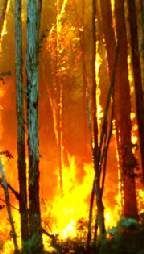
Most often found on moist or wet mineral soil, especially in recently burned areas. Grows best in subcalcareous soil conditions (pH 6.0) under full sunlight.
Mats can interfere with the establishment of seedlings of other vegetation. Invasion and formation of mats after fire helps to prevent soil erosion. Revegetates areas where mineral soil has been exposed. Colonies aid in the renewal of the humus and prepare the soil for the establishment of other vegetation.
Fire:Rapidly invades burned areas by light, wind-borne spores. Exposed mineral soil and high lime concentrations present after a severe fire provide favorable conditions for establishment.
An initial or early invader of burned sites, it exhibits dramatic growth following fire and in some cases attains 100% cover. Dominates the early moss/herb stage after a fire but does not persist through subsequent stages of succession.
"Most importantly, these organelles reproduce so that many are present at one time in the cytoplasm but never inside the nucleus. Both types of organelles, plastids and mitochondria, not only proliferate inside cells but reproduce differently and at different times from the rest of the cell in which they reside."
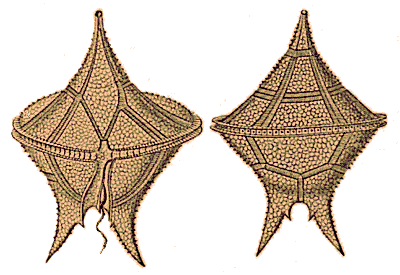
The case of dinomastigotes, or marine dinoflagellates: are free floating (planktonic, marine organisms) "The DNA organization is unique in this group. Histones forming nucleosome are absent." And "Uracil is a common replacement for thymine and it is incorporated into dinomastigote DNA during synthesis." She notes that "both photosynthetic and heterotrophic modes of nutrition," or feeding habits are present in these motile creatures; so the move about and they resemble plants (photosynthetic) and animals (heterotrophic).
Lynn Margulis, Origins of Sex: Three Billion Years of Genetic Recombination, p. 89.
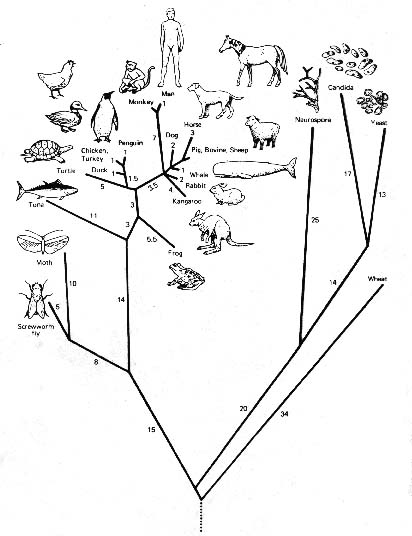
She insisted that branching versus fusing was a more reasonable framework for theories of biological origins.
dinoflagellates are marine plants with a tail that moves them through the water.
Spirochetes merged first to create with monera the protoctista.
When mitochondria fused, the protoctista became more animal like
"incessantly metabolized by the mitochondria that we know are former respiring bacteria. Whether or not spirochete wrigglers are at the core of our being, we remain symbiotic beings on a symbiotic planet."
p. 49.
 |
|
| Search here |  |
Loading
|
|
 |
|
|
|