


The order we impute.
"the tragedy of scientists. . . ."
concepts | dialectic | Kaku | cosmos | quantum | life | dates | Einstein | Bohr | Darwin's ideas
"I produced some kind of relative certainty out of uncertainty."
Feynman, p. 98 referencing pp. 32-33.
"This Unscientific Age"
"I dedicate this lecture to showing what ridiculous conclusions and rare statements such a man . . .can make. . . . I don't think it is scientific at all . . . . This is not a scientific age from that point of view."
p. 63.
He means from the worldview, point of view
"Things that we can tell about by trial and error."
p. 63.
He employs an implicit dialectic; that is inherent contradiction to discern a more precise knowledge of things we can recognize.
Sanctified, arising in the supernatural, divine; the Pope's encyclical.
Profane, based in the natural order on no authority Feynman
- means to an end: diagrams & explanations
- the knowledge discovered & tested
- using of what is knowable
The organization we apprehend. "classical Greeks defined reality as a homogeneous, ordered whole. In contrast, modern Western culture has tended to view reality dualistically, splitting it into subject and object, humanity and nature, mind and matter. Contemporary thinkers who attempt to reclaim the universe as cosmos have been forced to abandon the fixed structure of classical cosmos, except that this grand unification remains elusive.
A grand unification of physical existence:
- Gravitation
- Magnetism and Electricity
- Radiation (weak nuclear force)
- Fusion, curve of binding energy (strong nuclear force)
concepts | dialectic | Kaku | cosmos | quantum | life | dates | Einstein | Bohr | Darwin's ideas
| Bronowski vs Feynman | Feynman | ||
|---|---|---|---|
| Authority | deities, custom, ritual, Aristotle rejected. | experimentation | |
| means | revelation versus observation | measured & refuted | |
| politics | conservative (Burke) versus classical liberal (Mill) | liberal | |
| period | 1908 to 1974 contrasted with 1918-1988 | 1963 | |
| focus | history of fundamental ideas | purposes of science | |
| "The paradox of knowledge is not confined to the small, atomic scale. . . ." | "Doubt is very clearly a value in the sciences." | ||
| pp. 272-274. | p. 28 | ||
| Climax | "the tragedy of all humankind." | Revealing his intentional deceit |
Feynman asks "How do you get new ideas?" and he answers that by saying, "That you do by analogy, mostly and by working with analogy you often make very great errors."
"Who are the witch doctor? Psychoanalysts and psychiatrists of course."
p 114.
"the Arabian scholars of science during the Middle Ages. . . . they wrote commentaries.
"That's where the analogy breaks down."
p. 115.
"This does show . . . .There are great dangers in arguing from analogy"
p. 117.
And in the near future the developments in biology will make problems like no one has ever seen before."
p. 120.
"The problem of moral values and ethical judgments is one into which science cannot enter, as I have already indicated, . . . "
p. 120.
"You see we need some kind of mechanism, something like the trick we have to make an observation and believe it, a scheme for choosing moral values."
pp. 120-121.
Newton and Hooke:
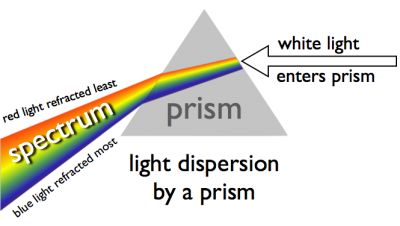
"He wasn't arguing whether the phenomenon was right. Hooke took a prism and saw that it was true."
p. 121.
"And today we should learn that lesson and not have an argument as to the reasons why we agree."
p. 121.
Feynman's The Meaning of it All, following on Bronowski should be seen as a bridge work of three lectures to the Kaku book, Beyond Einstein
The world is not only stranger than we know it may be stranger than we can ever know.
"This freedom to doubt is an important matter in the sciences and, I believe in other fields. It was born of a struggle."
p. 28
Bodies
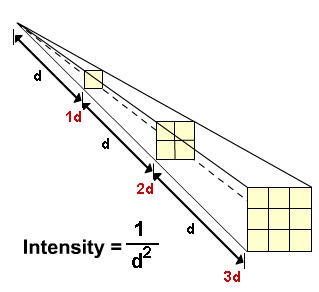
"proportional to the mass and inversely proportional to the intervening distance separating the bodies."
Basically all the inverse square law says is that an object that is twice the distance from a point source of light will receive a quarter of the illumination. At three times the distance the reception falls to one ninth.
concepts | dialectic | Kaku | cosmos | quantum | life | dates | Einstein | Bohr | Darwin's ideas
• impute, from the Latin, "to reckon"
• logos, from the Greek, ration or ratio; hence reason
techno – to conjoin
epistemenikos – how it is we know
science is from scientia – knowing (gnosis as knowledge) science is actually from a word in Latin that is a poor substitute for the word epistemenikos
sophia – wisdom
Partners or parents–science and technology?
When did Feynman write these lectures?
Feynman on Science & Society in the 1960s.
Richard Feynman, The Meaning of it All, Determining the author’s point of view.
I The Uncertainty of Science, http://myweb.rollins.edu/jsiry/DoubtsRoleFeynman.html - premise
II. The Uncertainty of Values, http://myweb.rollins.edu/jsiry/DoubtsRoleFeynman.html - motive
III. This Unscientific Age, http://myweb.rollins.edu/jsiry/Feynman-Meaning_Book-notes.html - Thoughts
The change in the meaning and relation of science and technology occurred well before Einstein's birth.
The 1600s as a period of rapid and definitive discovery.
- 1615 – a discourse on the arts is technology. For example see Kaku.
- 1660 – a craft trade or skilled occupation is a science.
something occurred to shift the meaning and relation of these two terms.
"How you get to know is what I want to know, Feynman says in concluding his first lecture.
p. 28.
As a "body of regular or methodical observations or propositions ... concerning any subject or speculation" science was thus used from 1725; in 17 century–18 century. [Dictionary of Etymology]
• 1803 – earliest use of the term scientific revolution.
• 1834 – William Whewell uses the term scientist, after artist.concepts | dialectic | Kaku | cosmos | quantum | life | dates | Einstein | Bohr | Darwin's ideas
Quantum relativistic shift in the worldview of 20th century physical science.
Einstein is one of a multitude of people who so fully changed physics after 1900 that we associate him with the quantum-relativistic revolution in theoretical mechanics.
This status initially rests on his work because in 1905 he published three unsurpassed papers on:
1. the thermal disturbance of atomic particles, Brownian motion.
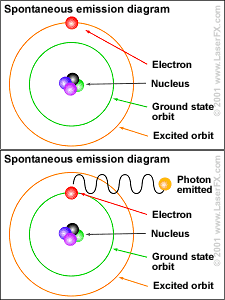
2. the capacity of atoms to absorb and emit light, the photovoltaic effect or behavior of the lightquantum.
3. the special theory of relativity stating that how we measure space and time are dependent on our speed or velocity in relation to other observers. E=mC2; see also web page.
What this meant was that previous beliefs in the solid character of atoms as the smallest construct of matter, the behavior of light, and the existence of simultaneous events were overthrown by his and many other people's work.
concepts | dialectic | Kaku | cosmos | quantum | life | dates | Einstein | Bohr | Darwin's ideas
- 1610, Kepler's Laws of Planetary motion
- 1689, Newton's Principles and gravitational formulas
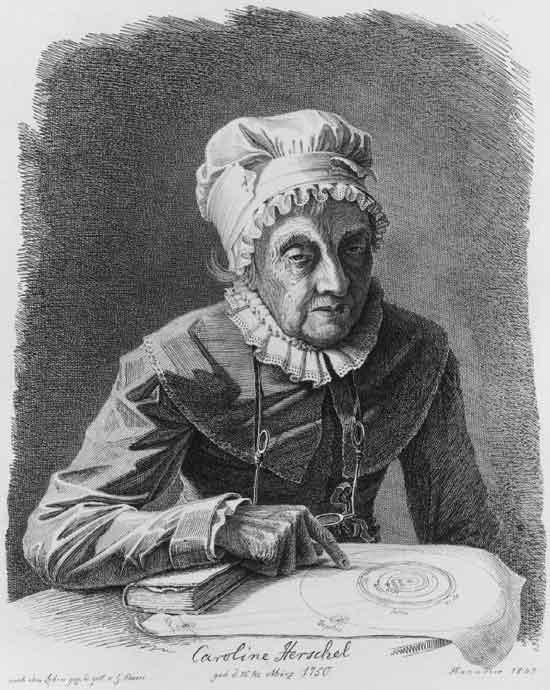
- 1781, William Herschel discovers Uranus on March 13, & with Caroline Herschel (right) create star charts.
- 1876, James Maxwell's equations on electromagnetism
- 1898, the discovery of electrons, x-rays, radiation
- 1905, The special theory of relativity
- 1911, Niels Bohr proposes a quantum behavior for atoms
- 1915, General theory of relativity
- 1927, Werner Heisenberg, The Uncertainty Principle electrons behave in non-traditional ways
- 1930, Enrico Fermi detects neutrons in atoms.
- 1939, Lise Meitner describes the decay of Uranium [U235] into Barium and Krypton as "fission."
- 1942, the first nuclear chain reaction on December 2.
- b. March 14, 1879 in Ulm, Wurttemberg, Germany.
- d. April 18, 1955 in Princeton, New Jersey, USA.
Einstein papers and archives on line.
Comprehensive chronicle of his life.
Key moments and personalities in Einstein's search – lasting all his life – for a more elementary "unified field theory."
Contrast with Werner Heisenberg
Argument with Neil's Bohr
Collaboration with Leo Szilard
The "Einstein letter" to FDR
opposition to atomic and hydrogen weapons
Others
Joseph John [J. J.] Thomson --1897-- [See this link] discovered electrons in a series of experiments designed to study the characteristics of electric discharge in a high-vacuum cathode-ray tube.
Ernest Rutherford – (1907) created modern experimental physics in detecting sub-atomic particles and mentor to Bohr among many others.
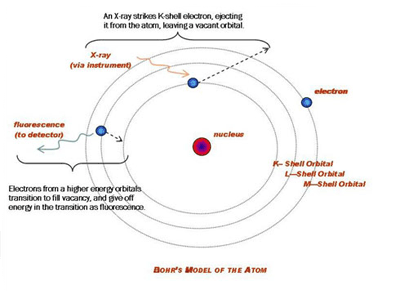
Niels Bohr – took Rutherford's atom model and Max Planck's quantum (1900) concept to revise the way atomic behavior was understood in 1911. Atoms are not miniature sun's surrounded by planet-like electrons, but instead are the sources of two powerful universal forces.
concepts | dialectic | Kaku | cosmos | quantum | life | dates | Einstein | Bohr | Darwin's ideas
The microcosm (the smallest order we can imagine and test).
A flow of electrons: "atoms. Beautiful –mile upon mile of one ball after another ball another ball in some repeating pattern . . . ."
"The experimenter may like one result better than another. . . . You do not have everything under control."
Feynman, pp.12, 18-19.
In 1913 Bohr proposed a theory about the structure of the atom based on Rutherford's experimental discovery that negatively charged electrons and positively charged protons. His model described both how electrons are arrayed about the largely empty space around the nucleus and the way electron absorb and emit energy.
concepts | dialectic | Kaku | cosmos | quantum | life | dates | Einstein | Bohr | Darwin's ideas