Thomas
Merton once wrote that a person is known best by the questions they ask, as
opposed to the answers they may render about existence.
World view –Several authors refer to the concept of a worldview, starting with Bronowski and including Freud, Mayr, Dubos, and Kaku. Margulis certainly alludes to the concept as does the Galileo readings. So for clarification consider the following definitions as only a start for what the term "weltanschauung" implies:
The stories
we tell ourselves are either doors to heaven and hell, or windows on the wonder
of life, consciousness, conscience and meaningful patterns we discover and
chose to share with one another.
But these stories, nonetheless, develop out
of the questions we ask ourselves about existence, our lives and our times.
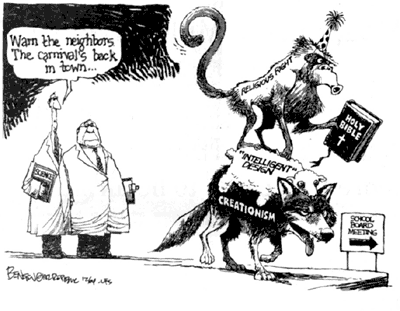
The Darwinian Revolution in the life sciences.
Questions to consider in the Mayr and Margulis readings on evolution.
Consider the method of Darwin - what does Mayr argue about his means to
the discoveries he made?Look for Darwin quotations; what do his choice
of words suggest?
What are
some of Darwin’s evidence for his ideas? How does artificial selection
differ from natural selection? How does vertical evolution differ from
horizontal evolution?
How is diversity accounted for by Mayr, Darwin, &
Margulis ? What are fossils for Darwin?
What are the inconsistencies according
to Mayr in Darwin’s thoughts? What is the sexual selection process
being described by Darwin?
Interpret
Darwin’s statement in light of Mayr’s critique of the term Natural Selection.
“This principle of preservation, I
have called, for the sake of brevity, Natural Selection. Natural selection,
on the principle of qualities being inherited at corresponding ages, can
modify the egg, seed, or young, as easily as the adult.” (Origin,
127)
What are the examples of unification that Kaku applies to the history of physics and the birth of quantum mechanics?
What are
the logical consequences of Einstein’s redefinition of acceleration,
light and material existence?
If space and time are not absolute, what accounts for their existence
and behavior; how does Kaku explain them?
What are the four or three fundamental forces in the universe?
An extra related
play:
Friedrich Dürrenmatt, The Physicists, 2-21-1962, Zurich, Switzerland was its debut.
So who is crazier,
the asylum keepers or its inmates?
"With eloquent brevity, Dürrenmatt’s play reveals the paradox of the twentieth century: at the supposed apex of reason and science, and under the banner of scientific and social progress, man became guilty of some of the most barbaric atrocities ever committed."
10th week'sreading is: The Universe Within, by Neil Shubin about geology, the masked connections between the origins of space-time, life and our own human body's organs and fossil remains.
12th week's reading about the human order is by Dr. Karen Horney who examines our
need to so control events that human potential is subverted into intolerance of others as rooted in self-loathing.
Are we inherently unstable?
What sort of irresolvable tensions do the need for control and the desire
for perfectionism generate in human development?
What does the author mean by “neurotic personality?”
Karen Horney,
Neurosis and Human Growth, How does human personality cope with
the challenges of socialization, infantile regression and opposition?
13th and last week'sreading is a play about the cosmos, light, and indeterminacy.
Frayn confronts us with responsibility for knowing and respect for not
knowing the facts we encounter.
Michael Frayn, Copenhagen, Is this play about scientific knowledge or social responsibility,
or are these two sides of a common coin?
How do each of
the characters in the play represent the characteristics of scientific
knowledge?
What is the dual
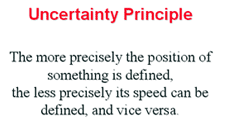
role of certainty and uncertainty in the play?
What stopped Heisenberg from creating an atomic weapon? Consider the answer
from Heisenberg’s own perspective or explanation and from Bohr’s
perspective and argumentation.
What is Margarite’s role in the play?
Brecht & Bentley inspect the past: Galileo,
by Bertolt Brecht.
What accounts
for the change and thus the two versions of the play GALILEO about which Eric
Bentley writes? Who
is the first to speak to Galileo in the play and what do they speak about?
Who was Galileo? Are these different images of Galileo: the icon, the
person, the figure?
What made
him and his ideas the sixteenth century “cause célèbre?”
Extra reading for curious people
(available in bookstores).
Joseph Siry, Marshes
of the Ocean Shore, What were the mistakes made in the earliest assessments
of wetlands by observers, naturalists & reclamation engineers; when
and based on what body of scientific ideas was the pre-industrial view
of marshes altered?
The incredible lightness of being. Weart identifies the motivation and the obstacles that problem-solving scientists confront. What great idea stood in the way of understanding the profound implications
for human pollution’s capacity to alter the atmosphere?
How did the “balance of nature” argument actually impede the acceptance of global
warming?
How did the five kingdoms of
life originate and what distinguishes one from another as they form a
complementary whole?
Essence of beings
on a Living Planet. Margulis reveals the hidden unity among the myriad
forms of life within life.
How is life divided by biological classifications?
What is the five kingdom system and what clues exist to its accuracy as
a rendering of the biological world?
In what senses and to what extents is the earth alive?
What is the logical and symbolic significance of Shakespeare’s The
Tempest?
What is the affect of European
colonization and resettlement on the United State's not having undergone the Renaissance as did the Latin American settlements that began a century earlier?
What is the "sleepy hollow motif" and how is it used for understanding American cultural transformation by the development of national attitudes about nature?
Go here for more complete
lists of critical vocabulary and specific definitions of words such as science,
epistemology, nature, technology, ecology, worldviews and culture. None of
these words are simply defined on their face value because their subtle or
nuances meanings offer important clues to complex themes in this class of:
Cosmos, or order, Bios, or life and Lux, or light.
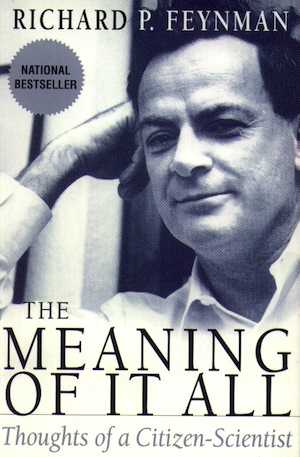
Richard Feynman suggested
that science is at once three things: 1) the means to know, 2) the evidence
of what we know and 3) the products of knowing applied to practical tasks.
Compare his definitions with the web site and the definitions used in common discussions.
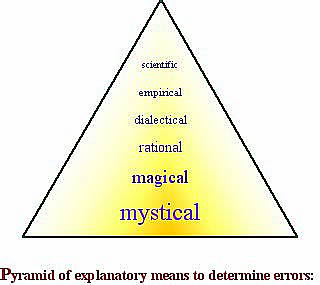
scientific:
the uses of doubt in a search for errors in conventional explanations based on heuristics,
reason, empirical and theoretical coherence.
empirical: the imposition of similar descriptions based on repeated observations
to test the logical assumptions arising from reason. Often thought of as merely "verified by observation." But such a simple visual approach has serious flaws.
dialectical: a refinement of a logical approach by means of employing opposites to
determine the essential qualities of experience.
rational: a logical approach to reason; analyzing and synthesizing experience according
to some definable relation among elements.
magical: based
on a belief in sympathies among like and unlike objects we encounter:
water is like blood because they are both fluids.
mystical
the belief that the reasons for the behavior we witness in the material
world is largely, if not wholly, inexplicable.
A fault-line in the Adriatic coast of central Italy reveals a masked reality.
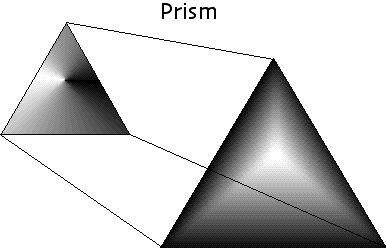
The
pyramid in three dimensions could be conceived of as a prism, through
which we look at the world; an instrument to examine the complexity of
experience.
Mystery
of the order, origins and function of the Universe, the Earth and its "strange
freight" of passengers.
The journey of
stars, life and humanity begs for an explanation, because since the earliest
recorded languages, humans have told stories about how the world came to be,
continues to function and holds our attention.
Themes in the above questions about knowing the natural world are cosmos, life, and light. And thus, how the inorganic and organic means of existence sufficiently describe the modern world as functioning in a necessary and sufficient way without the need of corrective, divine intervention.
Science is a means of determining errors
and is not, as many imagine, the surest road to Truth.
I argue that since we are limited simultaneously by a world that has no need of us and is so challenging to comprehend consider redefining your ideal of science as a search for ultimate rather than tentative truth.
If:
1) We "can't
handle the truth," and t
2) he world is not only "queerer than we think, but is queerer than we can think," according to J. B. S. Haldane;
Then, the surest way to understand science is to know it is a means of detecting errors.
Defining roles played by ideas in the ongoing dialogue that comprises science:
of the numberless
anomalies found in living things that hindered our comprehension of life,
of the mistaken
notions that chemical codes alone can account for observed changes in species
or in living communities,
of the challenges
to authority and the consequences of pointing out anomalies that challenge
received wisdom,
of the importance
of seeing past the obvious differences of living beings to reveal their
inherent organization and descent,
of recognizing
an essential give and take between the planet Earth and its living inhabitants,
in the shaping of the past and the current conditions,
of the importance
of discovering hidden parallels and even likeness among the materials, forces
and functions in nature,
of the dangers
inherent in the Faustian approach to knowledge based on alleged certainty,
particularly when no such certainty about nature can persist for very long,
of the fears
we have controlling our judgment of the unknown,
of the locus
of sanity, or the healthy respect for the constraints and opportunities inherent
in our human psycho-social condition,
and of the
creative interpretation of scientific concepts in the personally and historically
significant encounters that have shaped our world today.
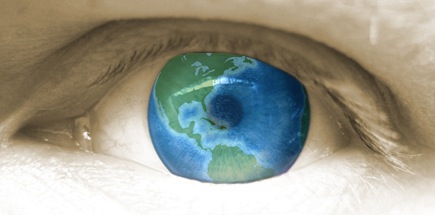 World view –Several authors refer to the concept of a worldview, starting with Bronowski and including Freud, Mayr, Dubos, and Kaku. Margulis certainly alludes to the concept as does the Galileo readings. So for clarification consider the following definitions as only a start for what the term "weltanschauung" implies: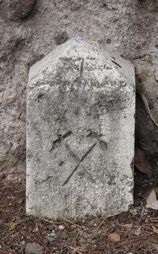
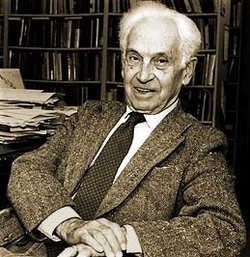
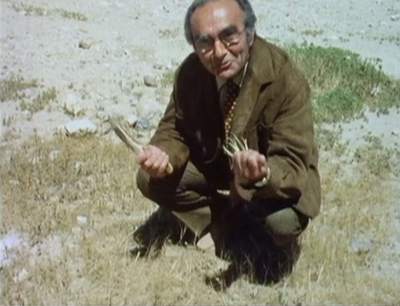 Ascent's author Jacob Bronowski