Octavio Paz, The Labyrinth of Solitude.
NEXT selection
"Sometimes the most remote or hostile beliefs and feelings are found together in one city or one soul,
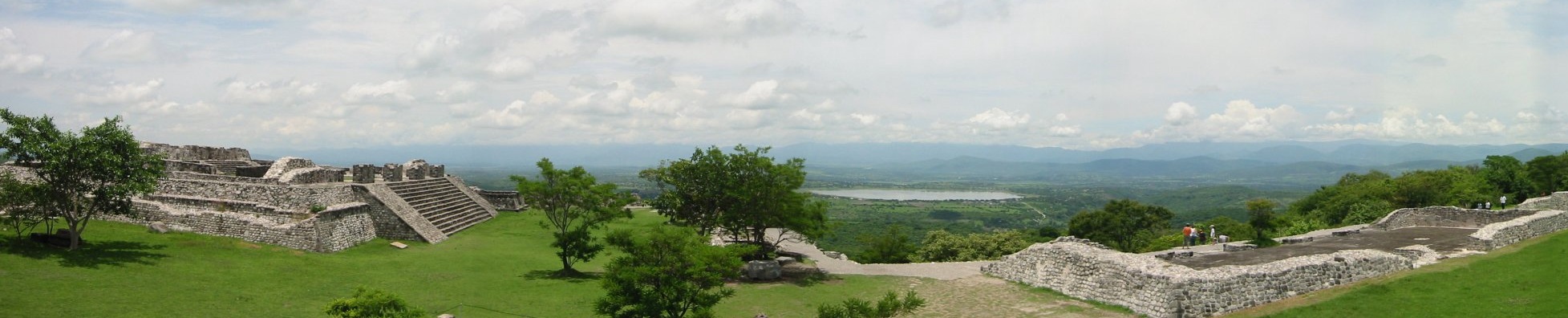
or are superimposed like those pre-Cortesian pyramids that almost always conceal others."
pp. 11-12.
- Where is Paz with respect to
- History
- Recurrent dualism, or duality is called a dialectic
- Circle as symbol of changes
- How are the parts related?
- Identity
- Indigenous
- Mestizo
- Universal story
- Resilience as an opposite of West Indian displacement
- An analogy
A context
The Analogy
"Much the same question happens to nations and peoples
at a certain critical moment in their development. They ask themselves: What
are we, and how can we fulfill our obligations to ourselves as we are?"
"the genius of a people"
belied by history
"Past epochs never vanish completely."
p. 11.
"The answers differ in different situations, and the national
character, which was thought to be immutable, changes with them."
p. 9
"...it seems to me there is something revealing in the
insistence with which a people will question itself during certain periods of
its growth. To become aware of our history is to become aware of our singularity."
p. 10
"Eventually these features (as reflected in the river of
his consciousness,) are seen as a face, and later as a mask, a meaning, a history."
p. 10
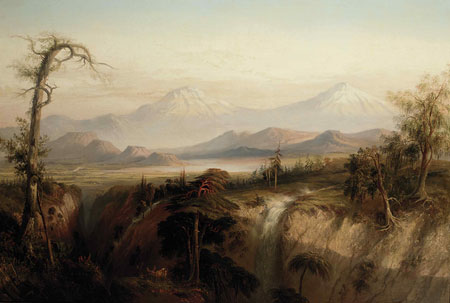
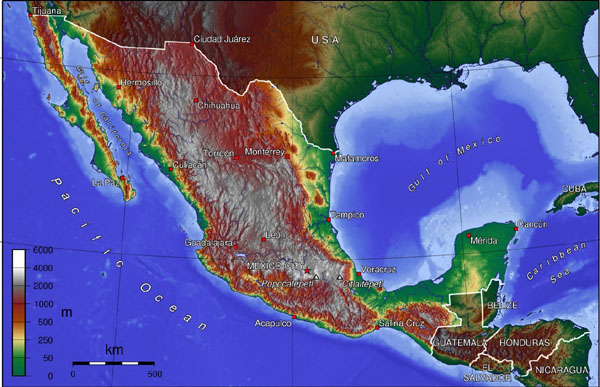
"Our territory is inhabited by a number of races speaking different languages and living on different historical levels. A few groups still live as they did in prehistorical times. "
p. 11
 "I believed that a work of art or a concrete action would do more to define the Mexican – not only to express him but also in, the process, to recreate him – than the most penetrating description."
p. 10.
to express and so doing recreate Mexican-ness, its
"instinctive
doubts about our abilities, ... our impotence as creators,.... our preference
for analysis" instead of "facing reality."
p. 10

"Los Angeles, a city inhabited by over a million person's of Mexican origin."
"This Mexicanism . . . . It floats without ever offering opposition" above or apart from "the North American world based on precision and efficiency."
p. 13.

Pachuco as an extreme.
 "persons who where disguises."
"This spiritual condition, or lack of a spirit, has given birth to a type known as the pachuco. The pachucos are youths, for the most part of Mexican origin, who form gangs in southern U.S. cities, they can be identified by their language and behavior, as well as by the clothing they effect."
p. 13.
"Since the pachuco cannot adapt himself to a civilization which, for its part rejects him, he finds no answer to the hostility surrounding him except this angry affirmation of his personality."
"The Negroes, for example, oppressed by racial intolerance, try to 'pass' as whites and thus enter society. "The Mexicans have suffered less violent rejection, but instead of attempting a problematical adjustment to society, the pachuco, actually flaunts his differences."
p. 14.
In southern border cities in the 1940s and 1950s young Mexican American men affected the "style" of exaggerated dress with a distinctive urban otherness for which there would be no mistake as to the ethnic derivation of those who wore the "zoot suits." The ensuing Zoot Suit riots of the early 1940s [May-June, 1943] between Mexican or Chicano youths and U.S. Navy enlisted men made the suits an even more significant badge of distinction for African Americans, or black and Italian youth. While the newspapers extolled the virtues of the US servicemen in ridding Los Angeles of 'degenerate influences," Eleanor Roosevelt clearly recognized the racial prejudice that lay just below the surface of the military turned mob as they assaulted Mexican, black and Italian youths who were wearing zoot suits.
A young Malcolm X described the zoot suit as: "a killer-diller coat with a drape shape, reet pleats and shoulders padded like a lunatic's cell." Zoot suits usually featured a key chain dangling from the belt to the knee or below, then back to a side pocket.
Zoot suits were for special occasions – such as a dance or a birthday party. The amount of material and tailoring required made them costly items.

Universality
"A study of the great myths concerning the origin of man
and the meaning of our presence on earth reveals that every culture -- in the
sense of a complex of values created and shared in common -- stems from the
conviction that man the intruder has broken or violated the order of the universe.
He has inflicted a wound on the compact flesh of the world, and chaos, which
is the ancient and,...natural condition of life, can emerge again from
this rupture. The return of 'ancient Original Disorder' is a menace that has
obsessed every consciousness in every period of history."
page 26
 Conclusion
"But exile, expiation and penitence should proceed from
the reconciliation of man with the universe. Neither the Mexican nor the North
American has achieved this reconciliation. What is even more serious, I am afraid
we have lost our sense of the very meaning of all human activity. . . . If the
solitude of the Mexican is like a stagnant pool, that of the North American
is like a mirror. We have ceased to be springs of living water."
27
". . . rises 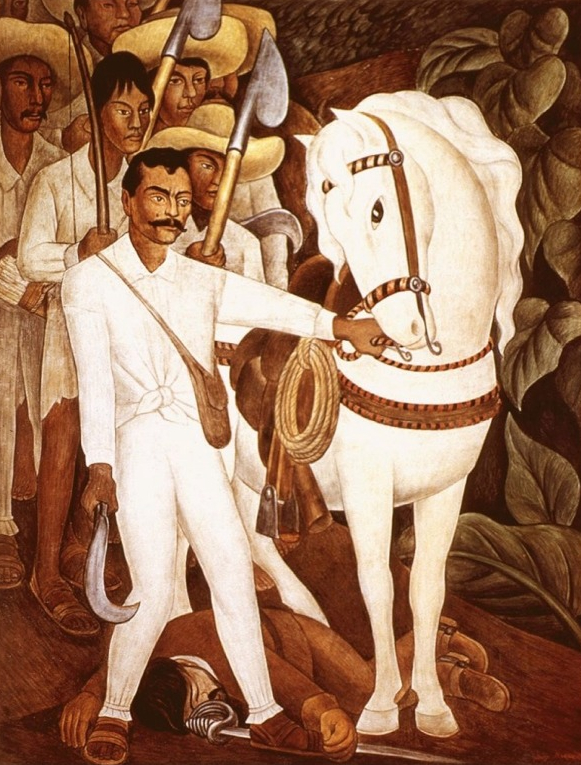 above the the human condition and breaks the circle of solitude that surrounds each one of us."
see "dialectic
of solitude"
p. 27
During the intense privations and fierce futility of the Spanish
Civil War, Paz writes that he saw a universal otherness in the faces of those
he stood in solidarity with against fascism. He says " they are the faces
of coarse humble people. But the memory will never leave me. Anyone who has
looked Hope in the face will never forget it."
Emiliano Zapata, as depicted by the muralist: Diego Rivera.
"In every man there is the possibility of his being –
or, to be more exact, of his becoming once again – another man."
28
What are the parts of the opening chapter?
Octavio Paz & a narrative of cultural identity in a world of crushing homogeneity
"between the world and ourselves."
¶ key phrases meaning pages
1 All of us 9
2 happens to nations and peoples (analogy) 9
3 "work with the realities of our situation" 10
4 "He goes through a reflective stage" 11
5 "Our territory is inhabited by a number of races speaking different 11
6 "I am trying to explain to myself some of the traits of the . . . Mexican" 12
7 "Los Angeles . . .vaguely Mexican atmosphere" This Mexicanism floats 13
8 "they feel ashamed of their origin" 13
9 "the pachucos" 14
10 "this angry affirmation . . .actually flaunts his differences" 14
Pachuquismo
11 "an orphan lacking both protectors and positive values" 15
12 Fashion "that clothing must be comfortable . . ." 15
13 "there is an obvious ambiguity: isolates . . .pays homage 16
14 "sinister clown whose purpose is to cause terror instead of laughter" 16
15 "He is a symbol of love & joy, or of horror and loathing," 16
16 "the circle that began with provocation has completed itself . . . " 17
17 "Persecution redeems him and breaks his solitude. . . and sin - health" 17
18 bugumbilia <–>bougainvillea "They're part of your being, your culture." 18
19 "we fear we will see ourselves in them" 19
20 "the states of depression or frenzy (or often both)" 19
21 "gratuitous crimes and religious fervor. Man is alone everywhere." 19-20
√2 "The history of Mexico is the history of man seeking his parentage, 20
23 "man does not feel that he has been torn from the center of creation" 20-21
24 "however influential the systems of production may be in shaping of a culture." 21
25 "I am only trying to clarify the meaning of certain experiences. . ." 21
26 " . . .made us more cautious of expressing our points of view." uses / abuses 21-22
27 "hypocrisy is a character trait . . . negation of all aspects of reality. . . " 23
28 "habits inherited from the Indians & the Spanish . . . are now an inseparable part of our being."
29 "NA are credulous and we are believers" -- myths to "rise above the sordid facts" 23
30 "world as "something that can be perfected" vs. "something that can be redeemed" 24
±
31 "Contemporary history invalidates the belief" in human modification "not in, he is history" 24-25
32 NA "the positive aspects of reality." "The sadism underlying all . . NA" 25
33 Defines culture "man the intruder has broken or violated the order of the universe" 26
34 the necessity of reconciliation --developed: "the circle of solitude that surrounds" 27
35 "Anyone who has looked Hope in the face will never forget it." 28
This mixing is called El Mestizaje.
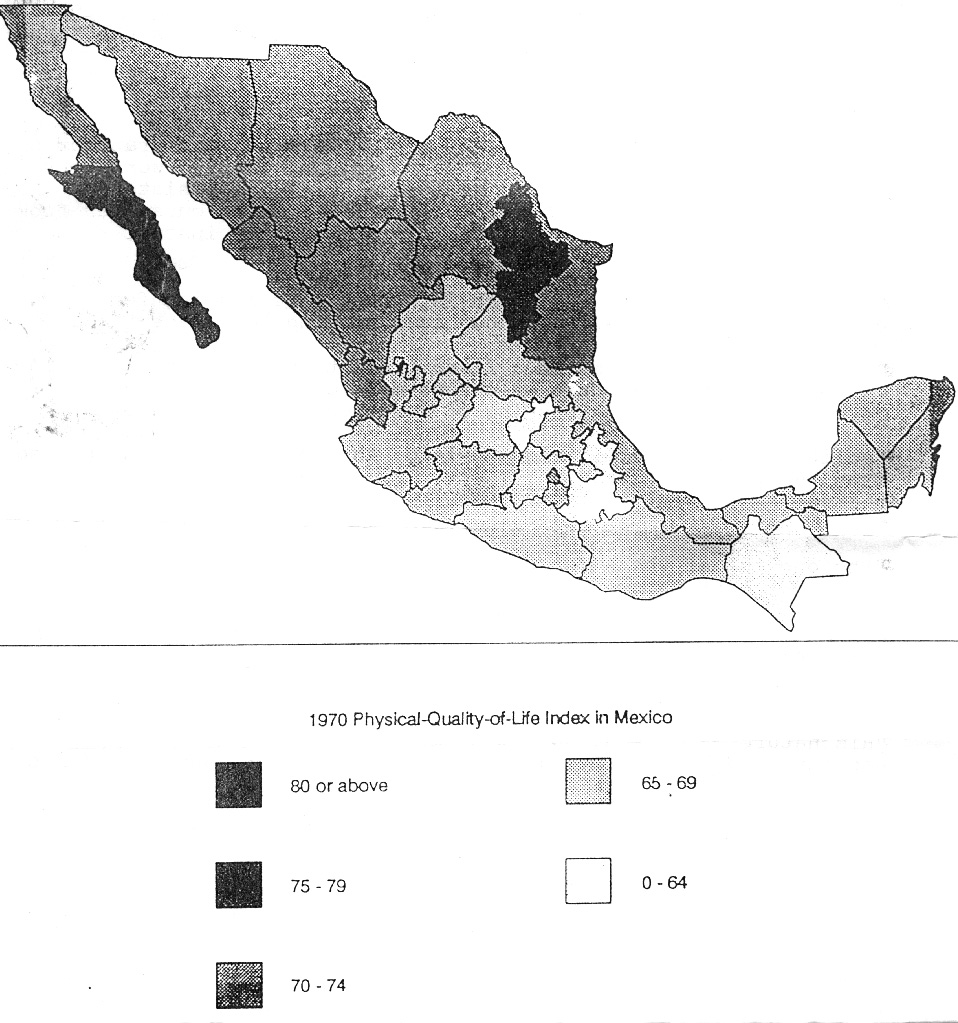
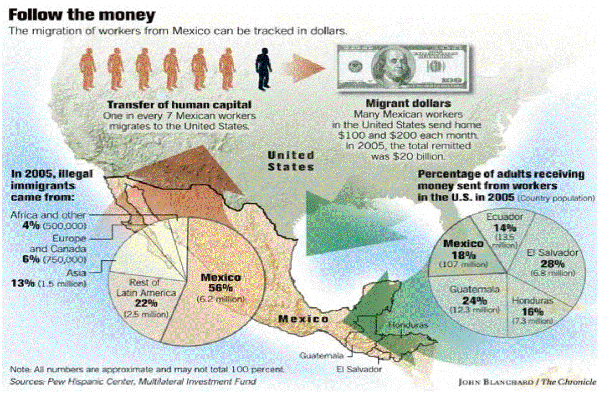
Fifty percent or more of the present day population of Mexico is considered to consist of "mestizos."
"In biopolitical terms, the Spanish word mestizaje (meaning a racial-cultural mixture between Europeans, indigenous Americans and/or Africans) defines both a type of biocultural process and also its result: a fusion (or confusion) of different lineages (Schmidt 2003; Ventura 2010). The fusion of mestizaje is peculiar because it is mediated by sex and kinship (it is reproductive) and because in it two human groups, usually described racially and of different origins, converge through both their germinal fluid and their habits. The difference between one type of convergence and the other is founded on the different mechanisms of intergenerational inheritance involved. Usually, we tend to distinguish between biological and cultural inheritance; the former is responsible for the stability (and variation) of the phenotype and the latter for the ethnic identity of groups."
"The history of mestizaje and the mestizo in Mexico is thus still incomplete."
"Since the 1960s, the percentages of tri-hybrid ancestry for Mexican mestizos have more or less converged, with different markers and powers of resolution for each region. The figures hover around 50% Amerindian ancestry, 40% European ancestry and the remaining 10% divided between African and Asian ancestry. Uniparental mitochondrial DNAs (on the maternal side) and Y chromosome (on the paternal side) have reaffirmed Amerindian dominance in the former (maternal) and yielded more complex results in terms of the paternal lines."
Carlos López-Beltrán
I, Vivette García Deister
IIThe Mexican government recognizes 56 different indigenous groups and these cultures that have survived largely because of their rural isolation.
The largest indigenous group is the Nahua, descendants of the Aztecs.
-
There are at least 1.7 million Nahuatl speakers.
-
There are approximately 1 million Maya speakers,
-
500,000 Zapotecs,
-
500,000 Mixtecs,
-
260,000 Totonacs and
-
130,000 Purepechas.
Aztec account of the Spanish conquest
Octavio
Paz | Labyrinth of
Solitude | consciousness metaphor | reconciliation
& Norté Americano failings
| Hope | Death
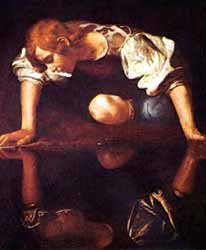 All of us, at some moment, have
had a vision of our existence a something unique, untransferable and very
precious. This revelation almost always takes place during adolescence. Self-discovery
is above all the realization that we are alone: it is the opening of an impalpable,
transparent wall -- that of our consciousness -- between the world and ourselves.
It is true that we sense our aloneness almost as soon as we are born, but
children and adults can transcend their solitude and forget themselves in
games and work. The adolescent, however vacillates between infancy and youth,
halting for a moment before the infinite richness of the world. He is astonished
at the fact of his being, and this astonishment leads to reflection: as he
leans over the river of his consciousness,
he asks himself if the face that appears there, disfigured by the water, is
his own. The singularity of his being, which is pure sensation in children,
becomes a problem and a question.
All of us, at some moment, have
had a vision of our existence a something unique, untransferable and very
precious. This revelation almost always takes place during adolescence. Self-discovery
is above all the realization that we are alone: it is the opening of an impalpable,
transparent wall -- that of our consciousness -- between the world and ourselves.
It is true that we sense our aloneness almost as soon as we are born, but
children and adults can transcend their solitude and forget themselves in
games and work. The adolescent, however vacillates between infancy and youth,
halting for a moment before the infinite richness of the world. He is astonished
at the fact of his being, and this astonishment leads to reflection: as he
leans over the river of his consciousness,
he asks himself if the face that appears there, disfigured by the water, is
his own. The singularity of his being, which is pure sensation in children,
becomes a problem and a question.