Anomalous Archaebacteria:
A clue to the taxonomically challenged about our heritage comes from these ancient, conditioned to extreme levels of salt and heat, bacteria also called archaeobacteria.
What are these extremophiles as examples of convergent evolution?

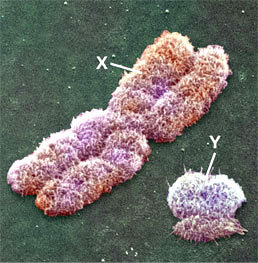
The various divisions of the Earth's diverse creatures.
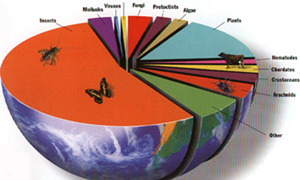
Each segment of the "deep dish" biological pie stands for the relative abundance by mass of each type of life.
Thus the joint-legged arthropods including insects are the most numerous and diverse examples of Earth's life.
Encased within our genetic inheritance is the record of races long extinct.
But with some cousins its harder to explain their relations with other family members.
For that reason the common genes along each different species' genome are compared to find similar codons.

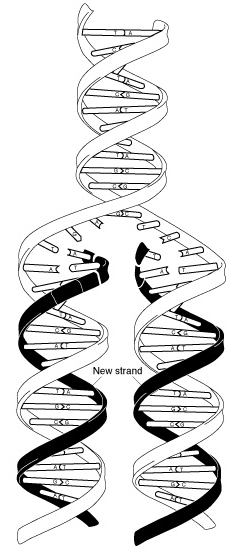
 Genes are actually stretches of coding DNA found wound along chromosomes that can
be interpreted and translated in to proteins by stretches of duplicating molecules
called RNA.
Genes are actually stretches of coding DNA found wound along chromosomes that can
be interpreted and translated in to proteins by stretches of duplicating molecules
called RNA.
By tracing similar strands of the DNA that are translated by RNA into proteins, there is a means to determine what organisms share hereditary material and thus reveal their common ancestry with other animals that have these same proteins.
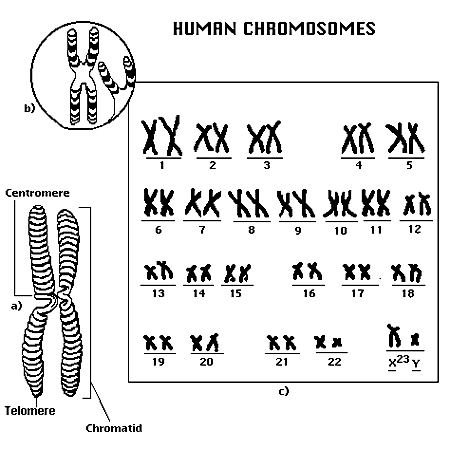
Human chromosomes, for example share over 98 percent of the base pair sequences with our closest relatives, our cousins, the chimpanzees.
Experts believe we are derived from a common ancestor with today's chimpanzees over seven million years ago.
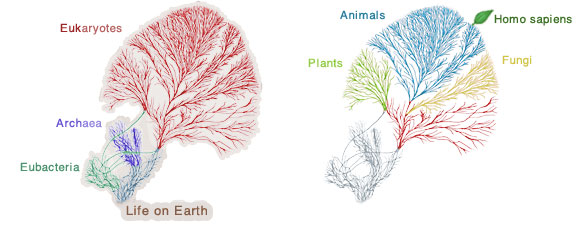
There are several competing ways of visualizing our genetic inheritance.
Two Rival trees:
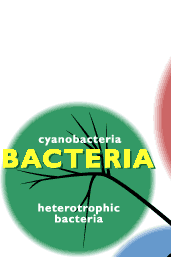
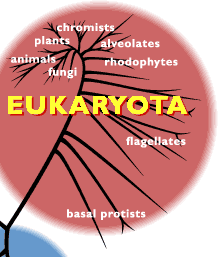
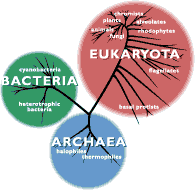
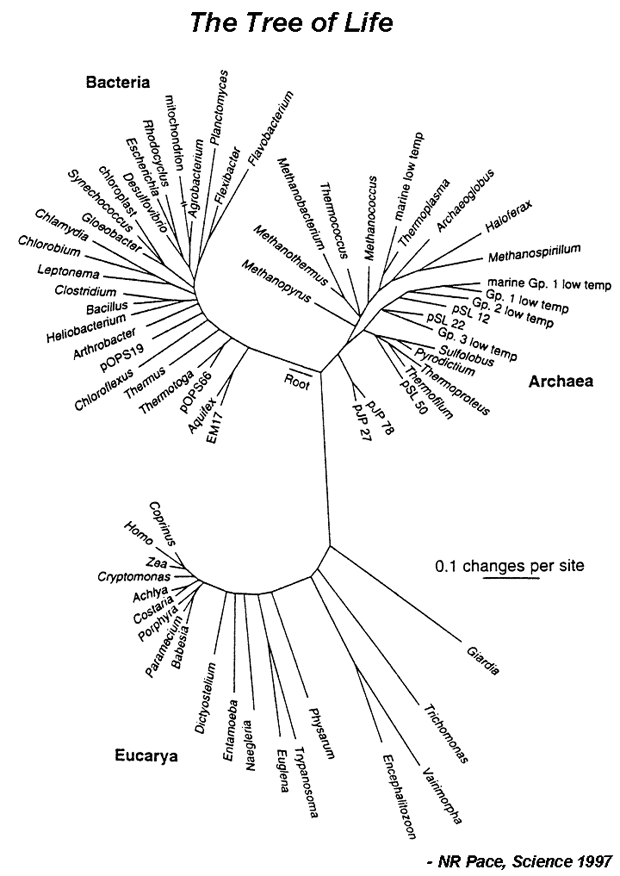
Six Kingdoms and Two Domains,
 |
||
|
Eubacteria |
<- (Monerans) -> |
Archaebacteria |
 |
||
 |
||
|
Eukaryota |
||
|
||
|
Fungi spores |
Plants embryo |
Animals blastula |
|
|
||
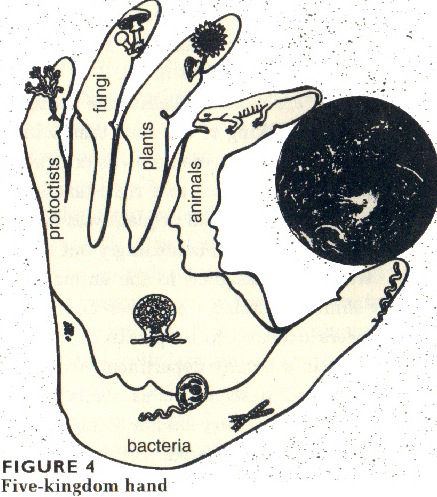
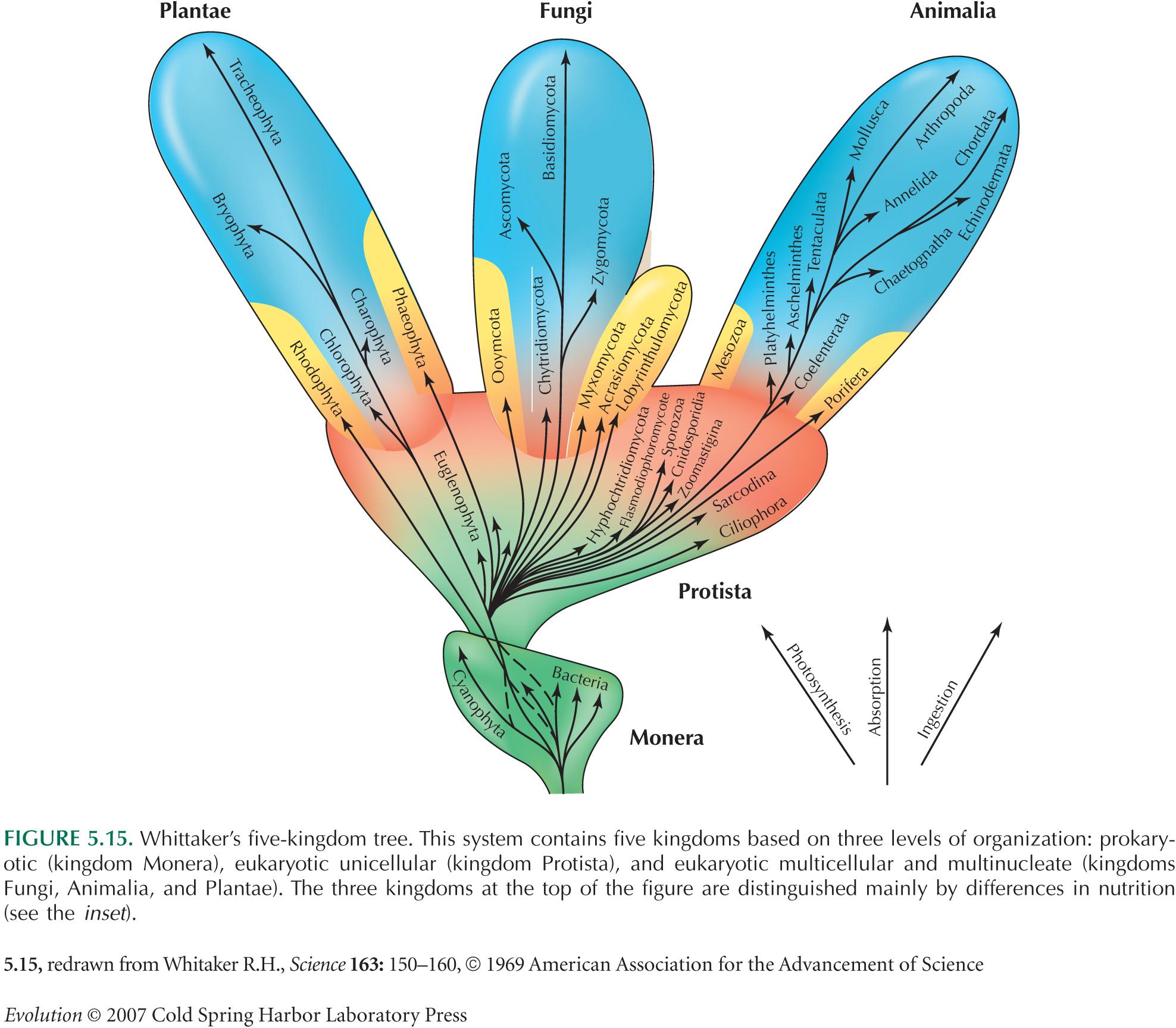
|
• Monera |
||
 |
||
|
Ediacarian
amalgamation & symbiosis |
||
|
• Protoctista
* |
||
| • Fungi |
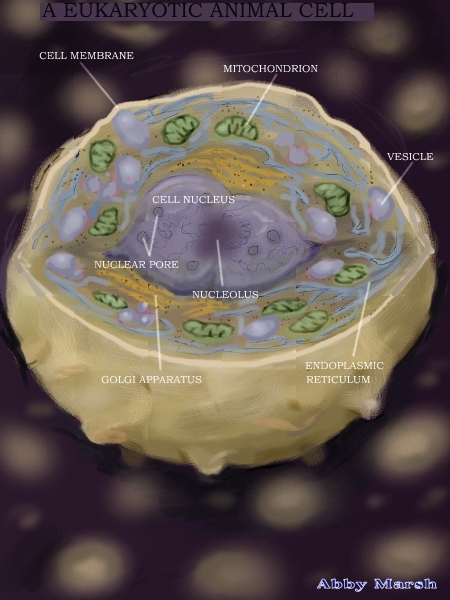 |
• Animals |
|
• Plants |
||
* “first established beings” 250,000 species, p. 65
** Diagram, p. 31
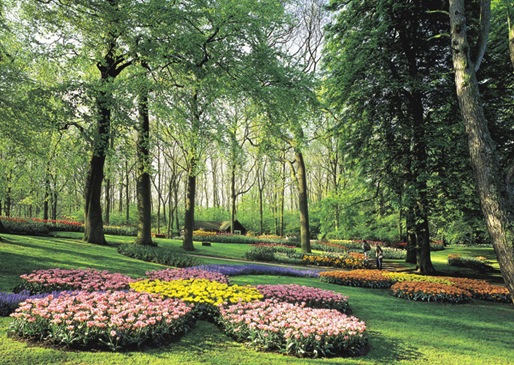
This dialectic grows ever older with every step taken in this "garden of forking paths."
JVS
Vernal Equinox, 04
“Evolution is simply all history.”
“change through time...the convoluted history of which we
are the living legacy”
Lynn Margulis, Symbiotic Planet, p. 24.
“Nothing in biology makes sense except in light of evolution.”
Theodosius Dobzhansky
quoted in Symbiotic Planet,
p. 24.
Map of Life - "Extremophiles: Archaea and Bacteria"
http://www.mapoflife.org/topics/topic_354_Extremophiles-Archaea-and-Bacteria/
April 25, 2014
Darwin | Dawkins | Margulis | Mayr | Tattersall
Miller |Hardin | Darwin's revolution | Margulis' Symbiosis | Steingraber | Carr | Keller | Thomas| Watson | Wilson
This button below works as a navigational aid.
schedule | Home | Atlas | site-map | Ecology | laws | quick look
Terms | Glossary | Word webs | Basic vocabulary | Advanced Vocabulary | Antonyms | Synonyms

Genetics Index | Is genetics significant? | History of Genetics | DNA discovery | RNA | Resistance| Visual images

Genetics | Science Index | Population Index | Global Warming Index | Land & nature Index | Brief