TITLE:
Visualizing, Perception, Apprehension and
Gregory Bateson's analytical critique of learning.

or - either ?

psychological | diagram | model | gestalt | illusions | ecological
 On this page the ideas of Gregory Bateson are used with sustaining evidence from Ann & Paul Ehrlich, René Dubos, and Buckminster Fuller to reveal how limited our human abilities are if we fail to detect our biases, uncover hidden assumptions, and see past the social and cultural blinders that we have embedded in our consciousness as our learning matured and were rewarded by authorities in our respective cultures.
Psychological | diagram | Bateson | Fuller | Gestalt psychology | Piaget | model | ecological
Visualizing as an early step in improving perception "The major problems in the world are the result of the difference between how nature works and how people think."
Gregory Bateson
"There are some interesting side effects of our unawareness of the process of perception."
p. 41.

" The division of the perceived universe into parts and wholes is convenient and may be necessary. But no necessity determines how it shall be done." Psychological | diagram | Bateson | Fuller | Gestalt psychology | Piaget | model | ecological
"Clearly, there is not a one-to-one correspondence between what's 'out there' and what we perceive."
Ann & Paul Ehrlich, The Dominant Animal, pp. 120-121.
Gregory Bateson, was a biological anthropologist, who had been long interested
in how the human mind reconstructs reality from the sensory perceptions of the world we inhabit. He wanted to describe carefully how each person's
individual psychological make-up reconstructs events from our biological construction of the surrounding world. We use our sensory perception to do this as a normal
function in our quest to survive but we emotionally and rationally reconstitute our experiences in an effort to better comprehend events.
So, in his sense of the process: there is a construction that is biological and reconstruction that is cultural working together for us to comprehend actual conditions.
Rational means to make sense of something. As opposed to a strict meaning of rational which means an orderly, analytically systematic, and deliberate method for understanding the world, we are interested in approaching how one experiences actual events. Bateson particularly wanted to know how precisely people determine the manner in which one thing relates to another thing – especially different episodes, or subsequent events."There exists in the human mind a prefiguration of reality, an interior imagery of nature."
Rene Dubos. p. 14.
We all must make some comprehensible rationale of our sensory experiences. To comprehend well, people fit events, persons, places, and things into a context and not just a grammar to express actual conditions.
grammar + syntax = schematic
Unless we fit experiences into some greater whole, these events in which we participate may not become meaningful. The world remains a disordered, frightening and threatening place unless we impose some rationality on these events in which we are involved.
When we become aware of a pattern of events, according to psychologist, Jean Piaget, we fabricate a schematic or schema. Schema's embed new experiences into a context that has meaning to us and those with whom we seek to relate, bond, or form long-term relationships.
"Man shapes himself through decisions that shape his environment."
— René Dubos.
psychological |diagram | model | ecological
Psychological | diagram | Bateson | Fuller | Gestalt psychology | Piaget | model | ecological
How accurate these schemas are with
respect to the behavior of the outer world is another most important
question because delusion arises from our misinterpreting sensory
cues or from misrepresenting what others have said to us. We all
miss most of what is said and most of what transpires because
we have not practiced how to focus on important details to add
to our growing schemas.
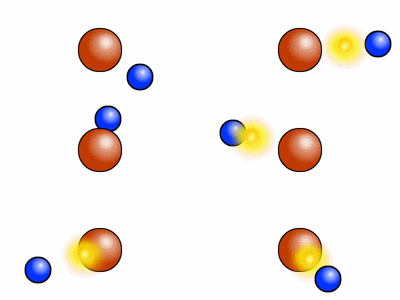
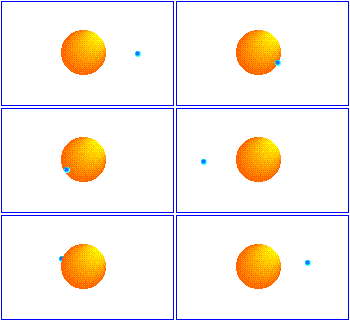
We use models and schemas to help us visualize the things we cannot see. Take for example this model of a hydrogen atom, the smallest building block of the atomic elements:
While people may think of atoms as little solar systems, or like the Earth (neutron as orange circle) and its moon (electron as blue circle), atomic systems are not at all like the planets or stars!
The fact is that in the fusion of stars, this basic atomic elemental Hydrogen (H) fuels the fusion. All of the elements are made from H and heavier elements are forged into more massive atomic elements that form the material from which energy and matter construct the world we experience in the surrounding conditions of existence. Even though we do not see atomic elements, we have rationally understood that these atoms are sources of the world's energy and matter.
Bateson wanted to be sure that the schematic of our minds was attuned to the ecology of a place because we run the risk of self-destruction when we fail to comprehend the ecological conditions that are part of a sense of place.
While ecology is a vaguely empirical term "a sense of place" is a very fuzzy aesthetic term with many layers. Though both ideas are reflective of a layering of our perceptions of the world the notion of a sense of place moves from the focused to the wide ranging. In this respect the idea begins with the sensory experience and moves into the narrowly analytical framework of science. From empirical science and the rational grammar and syntax of language "a sense of place" is apprehended by an emotional and an intellectual process of growth. That is because the "sense" is a faculty that moves along into the more synthetic and higher realms of expression, appreciation and an eye for details.
Psychological | diagram | Bateson | Fuller | Gestalt psychology | Piaget | model | ecological
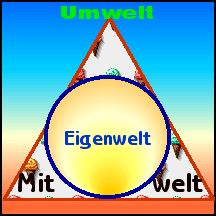
Drei welten
Models are abstractions from reality, in that they emphasize only a few parts for us to see far greater complexity in worldly relations more clearly.
| First Model: German Gestalt Psychology | ||
  |
 |
Three worlds in one: |
 |
 |
|
- |
the ground of existence, or the physical conditions of the universe. | |
- |
the middle ground between the observer and the world we apprehend. | |
- |
the individuals' personally constructed world | |
psychological |diagram | model | ecological
Psychological | diagram | Bateson | Fuller | Gestalt psychology | Piaget | model | ecological

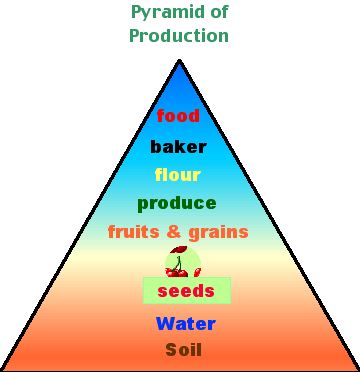
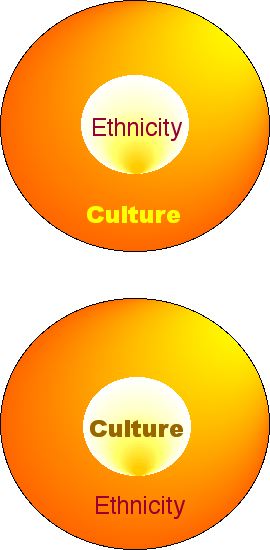
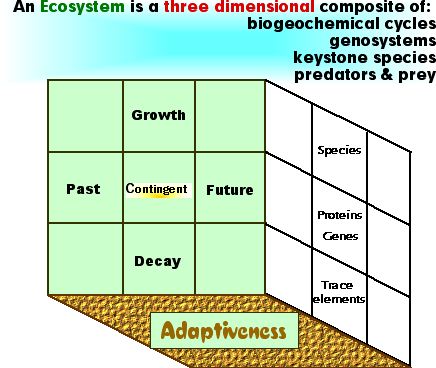
Second Model: distinguishes between material and ideological, or cosmological, perspectives.
Ecology when focused on describing human social behavior gives rise to both the concepts of ethnic identity and economic modes of production or means of subsistence.
Any such model or schematic that represents these ideas would be far more complicated than the term "mitwelt" suggests from the gestalt psychology model.
Material existence

Ethnic identity

"Human life should grow, not quantitatively through the conquest of nature, but qualitatively in cooperation with nature."
- Rene Dubos, A God Within.
psychological |diagram | model | ecological
Psychological | diagram | Bateson | Fuller | Gestalt psychology | Piaget | model | ecological
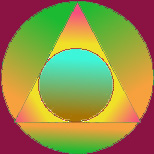
Third Model:
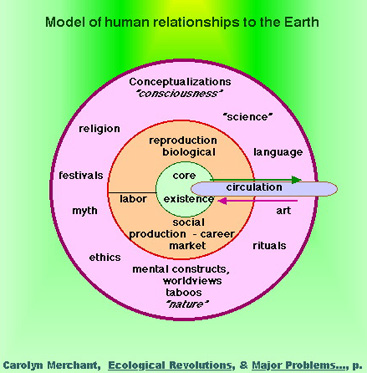
Merchant's Model of ecological
relationships is drawn in three concentric circles to represent ecological, social and cultural situations that each affect the other to generate continuous changes in conditions and perceptions of those altered conditions. The three circles are:
ecological core - central focus
social relations - concentric circle
consciousness - outer circle
interdependence - circulation among each and all of three concentric rings has to be depicted as a cycle in which continuous feedback links the core, to the social conditions and to the cultural adaptations to and adjustments of ecological and social realities.
psychological |diagram | model | ecological

Part 2: Learning to see carefully again.
From the empirical to the practical and on into the inspirational this journey of forgetting the familiar and remembering authentic contexts of the world is a very difficult learning experience.
The qualities one looks for in themselves, or others, or in nature, are as important as the process of seeing and as crucial as the clear expression of these perceptions. The process is never finished but it does include a multiple repertoire of learning techniques. The process must be self-corrective and open to reflective insights, as well as, the criticism of others. Just as our senses are varied and contribute differently to our "sense" of ourselves, so too developing "a sense of place" is a varied experience that flowers over time from a seed of inquiry into the "fruit of knowledge."
To nourish our perception you need three things.
- First a willingness to explore, discover and inquire.
- Second a knack for notation -- writing things down or rehearsing what we want to examine to explain it to others.
- Third we need to be astonished by the wonder of the details by which the world works.
- Lastly, do see past ancient authorities that hobble our perceptions:
"This meant, then, that the Greeks, in attempting to communicate their mathematical conceptioning, defined the circle as an 'area bound by a closed line of equal radius from one point,' he triangle as ' an area bound by a closed line and three angles, three edges, and three vertices.' The Greeks talked only of the area that was 'bound' as having validity and identity, while outside (on the other side of the boundary) existed only treacherous terrain leading outward to boundless infinity – an unknown and unknowable wilderness.
The feedback from this world view has ingrained fundamental biases into our present day thinking. We can only conceive of one side of a line as definable, organized, valid."
Buckminster Fuller, 1951.
Buckminster Fuller, after Frank Lloyd Wright argued that "god dwells in the details."
Psychological | diagram | Bateson | Fuller | Gestalt psychology | Piaget | model | ecological
But details alone do not make a coherent pattern. Only the constant testing of your imagination and your veracity in pursuit of the facts will yield the necessary internal dialogue for this "sense" to develop.
"The cosmos is a gigantic organism evolving according to laws which are valid everywhere and therefore generate a universal harmony."
Rene Dubos. A God Within, p. 15.
For example, the ancient peoples of Egypt, Persia, Greece and China, René Dubos tells us all conceived of the uniqueness of places with respect to fertility, nourishment and harmony among elements. The Romans, he says, called this rare and precise quality the genii loci [genius of a place] of any area.
"There is a demon in technology. It was put there by man and man will have to exorcise it before technological civilization can achieve the eighteenth-century ideal of humane civilized life.
— René Dubos.
NextPsychological | diagram | Bateson | Fuller | Gestalt psychology | Piaget | model | ecological
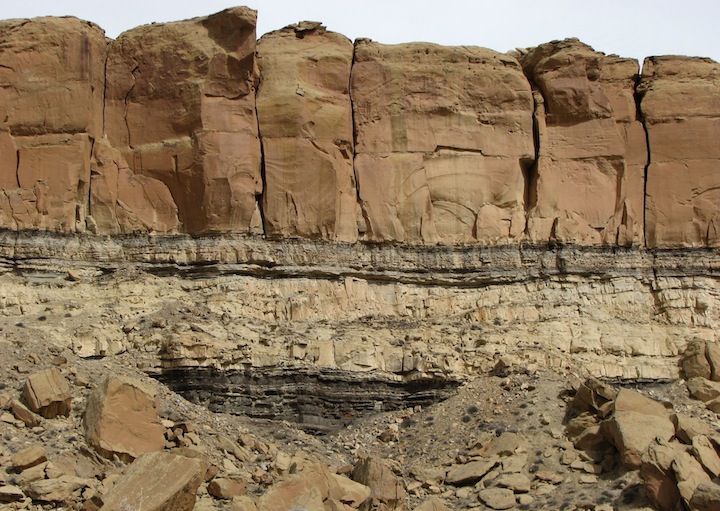
Chaco Canyon butte is a series of sedimentary layers suggesting older worlds apart from this present life.Added to or layered over the genius of a place is the archaic Mycenaean concept of the significance of
crossroads as opposed to termini (end places) or terminals because of the daemons that inhabited the world created its features, and especially dwelt at such forks in the road as could baffle travellers. And beneath these conceptions lies the fire rituals of the Zoroastrians and the blood slaughtering rites of the Egyptian or Hindu priests to restore the balance between people and places.
Now all these "superstitious" beliefs can be thought of as the embodiment of irrational fears. Or they can be seen as layers in an account of how a sense of land, water, earth and sky conjoin to nourish our imaginative, sensitive and emotional character. Any "sense of place" requires the recognition of the rational and the "extra" rational layers of our own persona that relate in some profoundly significant way with layers in nature. German gestalt psychologists refer to this layering as the three worlds or "drei welten" that arise from our biological condition.
By biological condition I refer to both the micro-details of our genetically derived evolutionary past and the macro-details of the ecological existence we experience daily. These are the biological "facts of life" that we and many others may think we are immune to since some people imagine that we are separate beings. On the contrary we are composite beings –or animals kept alive by bacteria that we live with in a world filled with obstacles and opportunities of which we are barely aware.Psychologically speaking, we are people who like all animals perceive reality (eigenwelt) and must communicate with others in our society (mitwelt) about the larger world (umwelt), but below the surface we are largely made up of bacteria. In many ways our beliefs are merely the linear comprehension of a far more intricate and complicated relationship with the world. Our perceptions are only real in a childish sense and that any normal adult will recognize that we all dwell deeply embedded in three worlds –these persist as interdependent perceptions – of a hidden and often obscured underlying reality giving rise to and sustaining our existence.
Among the reasons why we are deceived by our senses is because the child learns to speak of its perceptions (eigenwelt) in the language of the society (mitwelt) in which it is raised and that the physical world (umwelt) has no meaning for us unless it is voiced, heard and relayed to others (mitwelt). There are two ways to think of this layering of experience that is part of developing a proportionate "sense of place."
“Nature always strikes back. It takes all the running we can do to remain in the same place.”
— René Dubos.
Psychological | diagram | Bateson | Fuller | Gestalt psychology | Piaget | model | ecological
Gregory Bateson was among the most original thinkers in the last century.
"If we understand a little bit of what we’re doing, maybe it will help us to find our way out of the maze of hallucinations that we have created around ourselves."
? Gregory Bateson (Bateson, Steps to an Ecology of Mind, p.475)
He sought to suggest we equip our intellects with a set of "Steps to an Ecology of Mind" to match the ecological realities we were becoming more or less blind to understanding because of our deficient educational and media-suffused upbringing.
Of him, Nora Bateson, his youngest daughter has written:
"Bateson was quite different from most other university teachers. In the 1970’s he recounted how there was, almost every year, a vague complaint about his teaching. It was alleged that “Bateson knows something which he does not tell you,” or “There’s something behind what Bateson says, but he never says what it is.” As a teacher at the University of California, he would encourage his surprised students to read extensively in Alice in Wonderland. Lewis Carroll’s metaphoric language, he believed, would help them understand something of the human condition and the fundamental processes in evolution."
(Consider the Red Queen and the Red Queen Hypothesis, for example.)
Nora Bateson,"Ecology of Mind."
§ § §
Buckminster Fuller, The Critical Path. New York: St. Martin's Press, 1981. p. 46.
René Dubos, A God Within (New York: Scribners, 1972), p. 216. [20 Feb. 1901 - 20 Feb. 1982].
Bateson, Gregory. Steps to an Ecology of Mind Collected Essays in Anthropology, Psychiatry,
Evolution, and Epistemology. Chicago, Ill.: University of Chicago Press, 2000.Psychological | diagram | Bateson | Fuller | Gestalt psychology | Piaget | model | ecological
Please send your questions or comments to J. Siry
schedule | Ecology Home | Atlas | site-map