Lynn
Margulis and the need to surpass our "trained
incapacities."
| There is a spectrum of veracity along which one moves from the known to the unknown. |
| |
|
|
|
|
|
doubt |
| |
|
|
|
|
|
|
| |
|
|
| |
“…It is of very great value, and one that extends
beyond the sciences, I believe that to solve any problem that has never
been solved before, you have to leave the door to the unknown ajar. You
have to permit the possibility that you do not have it exactly right.”
Richard Feynman, Meaning... pp. 26-27.
|
|
| |
|
| |
|
| |
|
|
| |
“So what I call scientific knowledge today is a
body of statements of varying degrees of certainty….none is absolutely
certain.”
Richard Feynman, Meaning... p. 27. |
|
more on variability and uncertainty.
Foundations
of seeing the world and responding with
as little error as practicable when describing what
we can infer from what instruments sense, experiments can test, and others all may observe.
Geological time
The elemental Earth is quite rare.

Ancient dialectical
differences:
Herakleitos – a process (versus independent things) of apprehending
the logos of the world in which we are suspended a condition of ceaseless
motion.
Parmenides
– things are only apprehended by our minds, there is
no "world" of which we are part without our thoughts, so that sense
experience is illusory; insisting instead that 'What is, . . . is!' a constant
and unchanging stuff of existence.
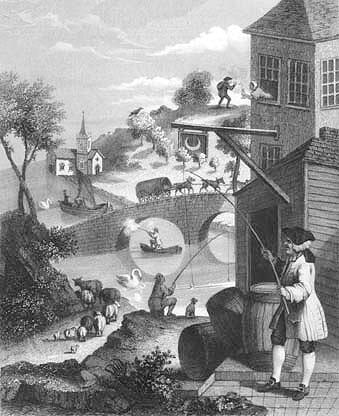
Visually we are prone to seeing illusions.
•
Nature –
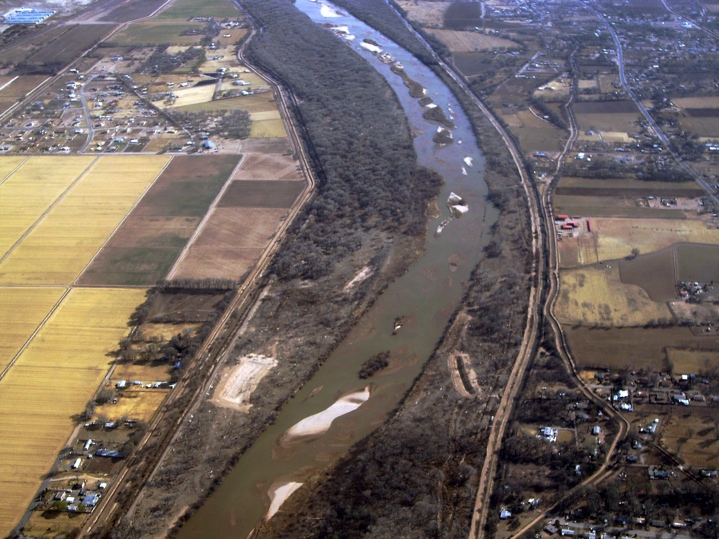
The Rio Grande River in Albuquerque, New Mexico.

GNOSIS as in DIAGNOSIS , means to KNOWING
| Plato
|
Aristotle |
| mentor |
protégé |
 |
| rational,
to reason dialectically |
sensible,
to make sense of |
| forgotten
at birth we recall wisdom as we mature, learn, and debate theories. |
sensory
we acquire the wisdom from knowing the world |
| True
reality
is the ideal of which we as are all material things mere reflections --hence
the apparent reality is false-- of the forms in heaven. |
Actual
reality is what we sense and analyze here in the material world
of existence and rationally describe by placing into categories based
on discernibly different or similar properties. |
| The
eternal heavens are the repository of the forms that we understand through
geometrically rigorous proof, a form of reasoning. |
The
material world is a synthesis of opposing forces that come together to
form the four eternal elements of earth, air, fire and water, and these
four comprise all things in differing amounts of each element. |
|
Allegory
of the Cave, from the Republic |
Nichomachean
Ethics, Physics, and Metaphysics. |
Space
as a:

Repository
of the
Sacred
and
Profane
Hierophany
“desacralization”
versus commonality of religious expressions of unifying
faith
“
stands for the restoration of the lost Harmony ”
Marx, p. 21.
Commercial
America destroyed the original harmony allegedly lost in Eden.
“nature” –
an "ill
defined feeling"
(p. 5)
"rustic
setting"
(p. 6)
Simple versus the Complex pastoral

•
Science
(1860s)
GNOSIS metaphor accurate rhetoric
as
A. what & how vs. B. coherent means to know
Feynman McCloskey
Eliade
•
dialectic
"imago mundi" and the "axis mundi"
to see two opposing sides
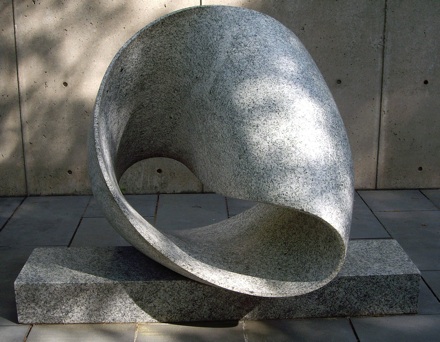
What
are the correct criteria for testing the interpretations we bring to science?
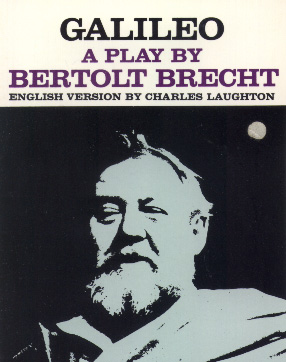
Brecht
reason and empiricism
Still & flat revolves & sphere
Feynman doubt versus
superstition
Marx
sentimental versus imaginative
Disturbance vs. ignorance (27)
Garden / agrarian
– mechanical / menacing
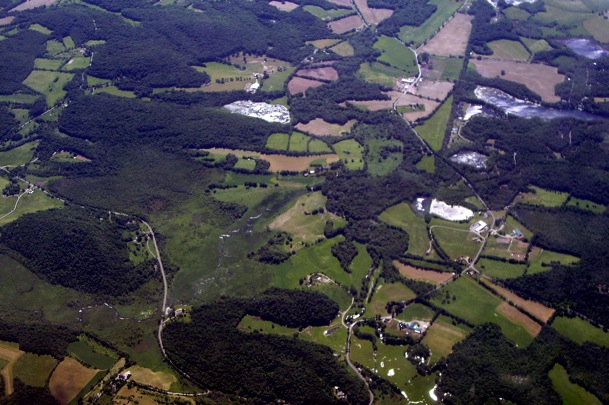
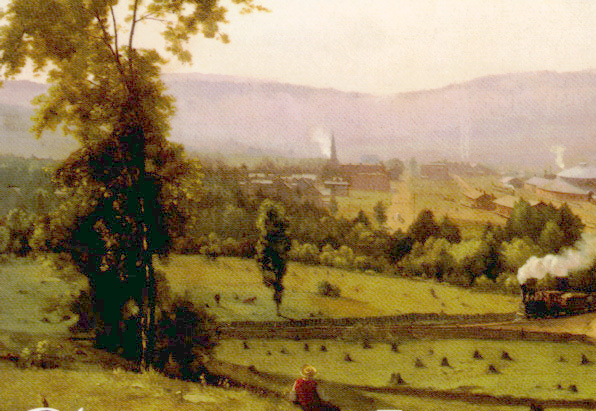
The landscape of the upper Hudson River Valley has been shaped by labor, machinery, and nature.
•
trinity of methods.
Dubos to see and describe (diagnosis) vs empirically
test (Koch)
God visits disease to punish – devil is the disease incarnate
Bainbridge Woman is an incomplete
man (according to Aristotle)
versus women are composite x-suppressed
Margulis – microbes are germs so you don’t have
evolution you have disease.
Mayr deductive
dead ends – inductive opening to redefine anomalies
Method
is rational, empirical, and heuristic (finding what is not obvious but may
nonetheless be there to inform our descriptions) as in Bainbridge –
genotype informs the observable phenotype.
Kaku, pp. 3-12, 195-197

Core
Clarify
nature
Cosmos and its relation to Life:
Dubos, Marx, Mayr, Bainbridge & Margulis
Organize
Sacred and the profane gives way to a Cosmos and the rarity of Life
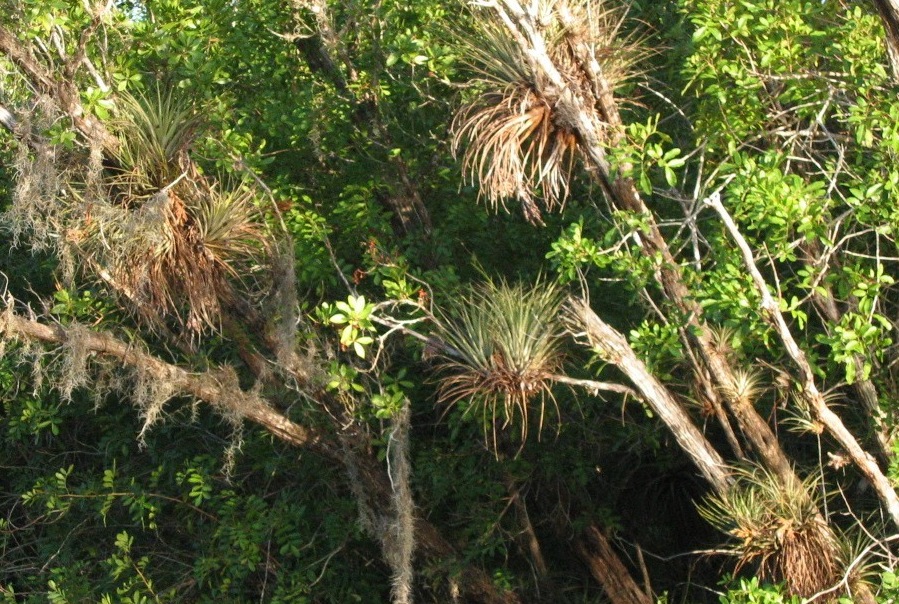
Life
is more complex than we can:
A.
Imagine, or than we think
B. explain rationally & empirically
–, and
C. heuristically - can discover - or we can think –
 After all,
we live on a symbiotic world within
a machinery made by unseen, unappreciated, disrespected, and unexpectedly complex functionaries.
After all,
we live on a symbiotic world within
a machinery made by unseen, unappreciated, disrespected, and unexpectedly complex functionaries.
Reflect
Engage
Leo
Marx, The Machine in the Garden (1964) Oxford University Press, page 47
"Ortega
uses the term to describe the outlook of a new kind of person, –a Naturmensch– rising up in the midst of the civilized world":
The
world is a civilized one, its inhabitant s not: he does not see civilization
of the world around him, but he uses it as if it were a natural;"
"Wants
his motor car and believes that it is the spontaneous fruit of the Edenic
tree."
"They
demonstrate that the public discourse, at least, this ideal has appeared with
increasing frequency in the service of reactionary or false ideology, thereby
helping to mask the real problems of industrial civilization."
Leo
Marx page 27”
The
Celestial Railroad: A wonderfully compact satire
"An
illusory voyage of salvation whose darkest meanings are reserved for readers
of Banyan. Like the hero in the Pilgrim’s Progress, the American pilgrim
thinks he is on the way to the heavenly city. As it turns out, however, the
same road can lead to hell, the partly concealed point being that the American
protagonist is not a Christian at all; he has much more in common with the
other traveler in Bunyan's Calvinist allegory, Ignorance."
p.
28
"two
conditions of consciousness."

Leo
Marx, page 46-47.
See: ATP://www.brains-minds-media.org/archive/150/CogCycleAnimation
“this
sense of discovery”
"it
is a comic version of the effort to reconcile conflicting attitudes toward
the New World. . . . . the actuality of the landscape, hence the close juxtaposition
of fact and fancy, is a distinguishing mark of pastoral set in the New World."
"Can
it be that the old, old dream suddenly has come true?"
p.
232, fn

"The
idea of the countryside as the appropriate site for the conversion experience
is common to the Christian tradition and the romantic poets. It is the accepted
convention in New England Calvinism.
Thus, Jonathan Edwards describes the sweet
sense of God's majesty and grace coming upon him as, in his words; 'I walked
abroad alone, in a solitary place in my father's pasture, for contemplation'."
Grace
"making the 'soul' like the field or garden of God, with all manner of
pleasant flowers, . . . and the gently vivifying beams of the sun."
See Aldo Leopold on country and its meaning.
Page 2 of 2.