 What
does analyze mean?
What
does analyze mean? .gif)
Analysis
§ Diagram
§ grammar
§ recursive
§ basic – advanced
§ Historical
§ Facticity
§ Science
§ Case study
§ Terms
? links




Paz, Octavio




to break up a complex, large, and difficult subject into its related but uncomplicated or supporting parts to better understand the actual definitions, and significance of the meaning of the subject while clarifying the relation of that material to a larger body of knowledge. To analyze is to conduct the analysis.
For example, knowing the exceptions and the rules that comprise an important matter, discipline, or field of specialty comes from analyzing the material, ideas, and concepts.
Analyze, Diagram of types of analytic arguments, Sentence diagramming, Recursive analysis, Basic & advanced aspects
Start | Historical analysis | Discerning facts | Scientific analysis | Technology | Defining terms | Case study | Learning | Sources
Analyze, the act of making an analysis, or a breakdown of complexity into simpler, component concepts to examine parts in order to discover related ideas and discover meaning. To break apart into more detail to uncover meaning or better define a concept or integrated ideas.
An example of historical analysis of painting and literature.
Analyze, Diagram of types of analytic arguments, Sentence diagramming, Recursive analysis, Basic & advanced aspects
Start | Historical analysis | Discerning facts | Scientific analysis | Technology | Defining terms | Case study | Learning | Sources
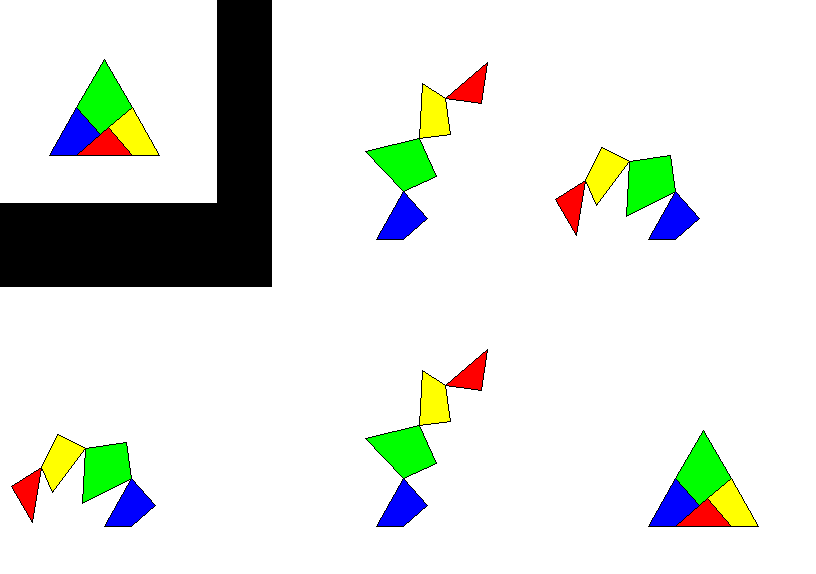
Any assertion, like an argument, can be broken into significant pieces: |
||||||

|
|
|||||
Break into parts |
||||||
|
|
 |
||||
| Format | Means | |||||
| structure | function | |||||
|
|
form | |||||
generality |
|
 |
||||
 |
||||||
| specific case | ||||||
|

|

|
||||
case by case |
inductive
|
break | draw | into | ||
|
 |
nature | nurture |  |
||
Then draw a general, true statement. |

|

|
||||
|
|
 |
||||
 |
||||||
|
||||||
| Grammar is a form analysis applied to the structure of languages to clarify expression and meaning. | ||||||
|
||||||

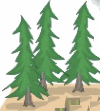

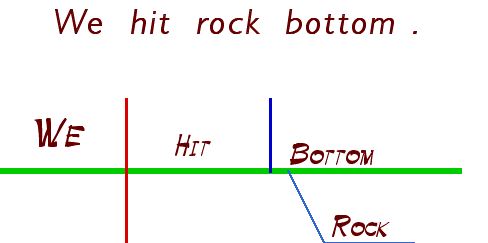
The expression diagrammed above is rarely meant literally, but once you look at it grammatically you can explain how it is so often meant figuratively to mean: "there are no remaining options."

Analyze, Diagram of types of analytic arguments, Sentence diagramming, Recursive analysis, Basic & advanced aspects
Start | Historical analysis | Discerning facts | Scientific analysis | Technology | Defining terms | Case study | Learning | Sources
Analysis
 The
process of separating something into its constituent elements to clarify an outcome.
The
process of separating something into its constituent elements to clarify an outcome.
Often contrasted with synthesis, which instead of separating, brings together disparate elements into a coherent whole.
A detailed examination of the supporting elements or structure of something, typically as a basis for a deeper discussion by assessing the separate criteria used to sustain evidence used in an interpretation.
To break into smaller – yet intelligibly significant – concepts
in order to determine how the supporting parts of complicated ideas adhere to the whole set of related ideas, sustain, relate, or cohere together.
Similar words for analysis and analyze are: investigation and to investigate, inspection and to inspect, exploration and to explore, a probe and to probe, research and do researching, summation and to review, make an evaluation and to evaluate, give an interpretation and to interpret, a dissection and to dissect.
In technology, the term trouble shoot or determine the source of a failure of function is a formal analysis of the parts of an apparatus, or machinery in order to identify the part or parts that have ceased to operate effectively.

Technology index landscape index words index map index photograph index
Global Warming index population index

Analyze, Diagram of types of analytic arguments, Sentence diagramming, Recursive analysis, Basic & advanced aspects
Start | Historical analysis | Discerning facts | Scientific analysis | Technology | Defining terms | Case study | Learning | Sources
Next.

How is the quality of any analysis necessary, or sufficient, to make a clear point?
Basic | advanced | philosophical | historical | scientific | a case
Basic to any analysis is a description of how we know something with evidence and examples sufficient to a) define broad terms with examples, b) establish an argument's component parts, and c) review what criticisms others have made.
Advanced
Any analysis may be improved by a thesis statement or clearly stated working hypothesis to which examples are attached in order to provide evidence to support or refute the premise of research.
Generally the more vague or sweeping an argument is the more evidence is required to sustain its assertions.
The more particular and specific the argument is, the clearer the examples need to be with respect to an explicit premise.
Analyze, Diagram of types of analytic arguments, Sentence diagramming, Recursive analysis, Basic & advanced aspects
Start | Historical analysis | Discerning facts | Scientific analysis | Technology | Defining terms | Case study | Learning | Sources
 Many historic
questions raise serious problems about how
we know from a range of evidence from material remains, to written
records,or transcriptions of orally derived traditions, or graphical materials
such as paintings, sketches, maps, drawings, plans and the like.
Many historic
questions raise serious problems about how
we know from a range of evidence from material remains, to written
records,or transcriptions of orally derived traditions, or graphical materials
such as paintings, sketches, maps, drawings, plans and the like.
Without a means of weighing the evidence the question of veracity – or who do we believe– is a nagging influence on writers who seek to distinguish facts from fiction and authoritative estimations from guesses or opinions.
We all have opinions, or doxa in the Greek tradition that are often biased, if not at complete odds with reality.
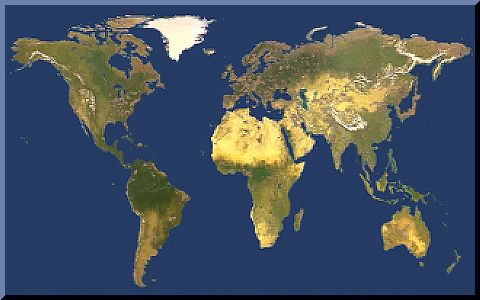
For example, the Roman's had no knowledge of the Mayan civilization of Central America and southern Mexico (and vice versa), but that did not mean that these cultures did not exist in reality. To distinguish what a culture, society or person knows, or is known from what actually exists, the German tradition uses the word Weltanschauung, or world view.
The veritas, or truth of the matter is both advanced civilizations were ignorant of one another's vast achievements.
History is filled with errors, masquerading as facts.
Analyze, Diagram of types of analytic arguments, Sentence diagramming, Recursive analysis, Basic & advanced aspects
Start | Historical analysis | Discerning facts | Scientific analysis | Technology | Defining terms | Case study | Learning | Sources
Loving wisdom
Philosophy is–in many senses–on a tangent to history because philosophers ask how we know anything for certain, let alone the ways we distinguish the fictions from the facts.
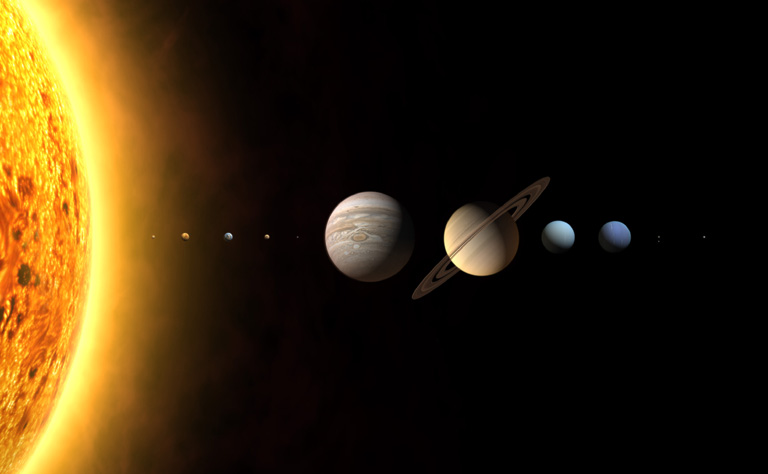
• By fictions–for example–consider that people once believed that the earth was the center of the celestial movement of stars, planets and even the sun.
• The fact is that the sun in the heavens is at one focal point in an ellipse around which the other planets, asteroids, comets and even our earth revolve.
 Philosophical discussion that bears on the quality of scientific,
historical, and technological questions.
Philosophical discussion that bears on the quality of scientific,
historical, and technological questions.
or
a feature or quality belonging typically to and serving to identify a person, place, or thing.
Next.
Analyze, Diagram of types of analytic arguments, Sentence diagramming, Recursive analysis, Basic & advanced aspects
Start | Historical analysis | Discerning facts | Scientific analysis | Technology | Defining terms | Case study | Learning | Sources
Scientific evidence must be necessary and sufficient to establish a refutable statement -- that is a premise that can be challenged by finding evidence to sustain, refute or not influence the standing of a proposition.
The ideas about the veracity of findings in science involve concepts about necessary and sufficient conditions.
| uncertainty |  |
 certainty certainty |
|
 |
|||
| necessary & sufficient | |||
necessary |
|||
sufficient |
|||
A spectrum concerning ways to think about the sufficiency of an analysis.

The following explanations are from:
Copyright © Norman Swartz, 1997
Department of Philosophy
Simon Fraser University• sufficient, "it suffices (i.e. it is sufficient for) an object's having four sides that it is a square. Or, again, it is sufficient for your having something to drink that you have a glass of " wine or water.
• necessary, "we all know that air is necessary for (human) life. Without air, there is no (human) life. Similarly, a microscope (or some other instrument) is necessary for human beings to see viruses. (Viruses are too small to be seen by the naked eye.)"
• Necessary and sufficient
"Pick any two conditions whatsoever. The relationship between the two conditions must be exactly one of the following four possibilities:
- The first is
a necessary, but not a sufficient, condition for the second; or
- The first is
a sufficient, but not a necessary, condition for the second; or
- The first is both a necessary and a sufficient condition for the second; or
- The first is neither a necessary nor a sufficient condition for the second."
The Stanford Encyclopedia of Philosophy suggests the following discerning necessary from sufficient:
"A handy tool in the search for precise definitions is the specification of necessary and/or sufficient conditions for the application of a term, the use of a concept, or the occurrence of some phenomenon or event.
For example, without water and oxygen, there would be no human or other forms of life; hence these things are necessary conditions for the existence of human beings."
How to cite the "Stanford Encyclopedia of Philosophy."
Next.
Analyze, Diagram of types of analytic arguments, Sentence diagramming, Recursive analysis, Basic & advanced aspects
Start | Historical analysis | Discerning facts | Scientific analysis | Technology | Defining terms | Case study | Learning | Sources
For
example, the case of:
Nature versus nurture;
or inherited versus acquired traits.
Like most people we tend to see our behavior and that of others as the products of either nature or nurture. By nature we mean our inherited disposition or genetic endowments as opposed to nurture which refers to our upbringing and conditioning in society, the families and institutional settings.
There is the very ancient argument over inheritance or environment as the most decisive factor in a person or a societies' success or failure in meeting worldly challenges. Yet this may be far too simple a dichotomy with which to understand people and history.
Today, however there is a great debate suggesting that nature (genetics) and nurture (environment) are not sufficient to explain how we behave, develop and thrive.
In some cases, both the inherited and the existing conditions bring out hidden abilities.
Still, there's no reason to ignore the debate, but to place it in the proper perspective that allows us to see that each piece fits together to for a more coherent whole; thus people and societies are products of both environment and inheritance. Nature is certainly necessary for our understanding of the roles that nurturing or nourishment perform, but by themselves, neither nature nor nurture are necessary and sufficient to explain what we see in ourselves, others and the creatures around us in this world.

 It
remains uncertain whether either nature or nurture is more decisive than
the other for it appears to be both that shape the personal,
if not the social conditions of our existence, but both point to yet another
kind of criteria -- known as emergent properties that are apparent only
when the necessity of nature is sufficiently nurtured to produce the observed
effects.
It
remains uncertain whether either nature or nurture is more decisive than
the other for it appears to be both that shape the personal,
if not the social conditions of our existence, but both point to yet another
kind of criteria -- known as emergent properties that are apparent only
when the necessity of nature is sufficiently nurtured to produce the observed
effects.
There are diseases, as well as developmental conditions in biology that reflect the role of all three (Nature, nurture, and emergent properties) in creating the living world we see and the study of these conditions in biology is called epigenesis.
Analyze, Diagram of types of analytic arguments, Sentence diagramming, Recursive analysis, Basic & advanced aspects
Start | Historical analysis | Discerning facts | Scientific analysis | Technology | Defining terms | Case study | Learning | Sources
Science Index | Population Index | Global Warming Index | Nature Index | solar system animation | growth of the USA
Index to genetics' related topics
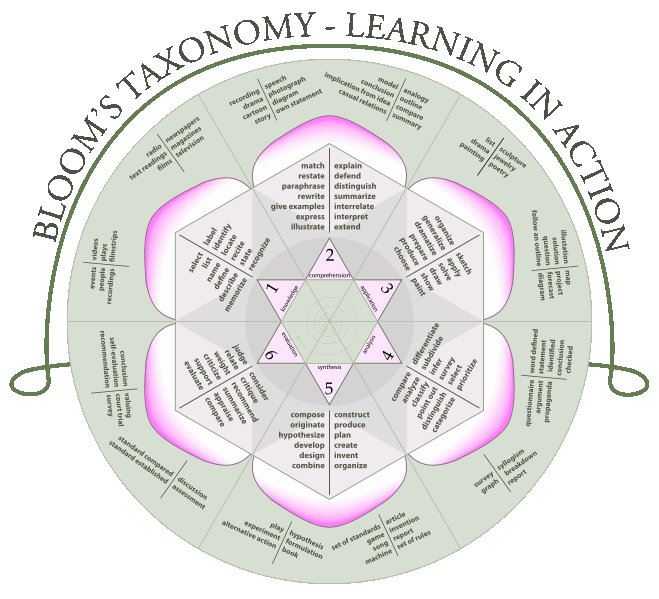
Steps in Bloom's taxonomy of behaviors that characterize critical learning:
- knowledge
- comprehension
- application
- analysis
- synthesis
- evaluation
Writer's Almanac on five things all writing does
Writer's Almanac on structuring an essay
Books that analyze Science
Descartes | Galileo | Hooke | Newton | Einstein | Tattersall | Gell-Mann
Science index | more science pages | even more science indexed!
Pursell | Pacey–World | Postman | Head | Tenner |Pacey–meaning| Eberhart | Snow | Kaku | Boulding | Delillo | Kranzberg
Analyze, Diagram of types of analytic arguments, Sentence diagramming, Recursive analysis, Basic & advanced aspects
Start | Historical analysis | Discerning facts | Scientific analysis | Technology | Defining terms | Case study | Learning | Sources
Outline of this page
Analysis
§ Diagram
§ grammar
§ recursive
§ basic – advanced
§ Historical
§ Facticity
§ Science
§ Case study
§ Terms
§ Learning
∞ links