
Search here:
WELCOME to the MAZE
"Good sense is the most evenly shared thing in the world. . . " Descartes’ “Discourse on Method” |
This page begins with links to all the pages on this site about words, terms, definitions, concepts and writing, because writing well reveals good thinking. This is also a focal point for links to the details of this site that have to do with written composition and editing. All of the content here is based on words that we use to create metaphors that describe the world. These links among images, concepts and explanations tie together and see how to filter this world in a literate manner so that you may understand my views more clearly. Words are crucial to understand. Many terms –vocabulary really– are ambiguous and vary as a means to describe learning. But they remain essential literate elements for comprehending metaphors that describe what is known about the universe. Words can both convey and hide meanings from us. But as a gateway to the images that evoke a more profound understanding of life, words excite us:
about our cosmos.
For example: atom refers to the smallest building block of matter. Nucleus, however, may refer to the core of an atom or the dark staining center of sophisticated cells of plants, animals, fungi, or microbes. By analogy nuclei may refer to a core, or center of things on which to focus our attention. Hence the idea of the nuclear family.
|


FEATURED CONCEPTS |
||
|
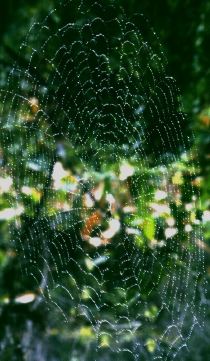
Words when used in phrases as language signal clues that can be threads in the web we spin to intercept reality; they are sticky parts of the web in which we snare sensations we receive. Language is an important representation of the world. Once captured, the imagination can prey upon these sequestered meanings. In this manner we derive directions from how we express what we sense.
Words as signs of the future based on older ideas of electrons to electronics act as switches in our minds.
|
|



Words used | Geological time scale | necessary facets of science | My blog
Dictionary | Vocabulary | Advanced Vocabulary | Words | fact v. fiction | Rare words | theme vs thesis | antonyms | dialectic | obscure words
Writing | quality of writing | writing from texts | how to approach writing | writing papers | writing & world views
Research sites | nature home | technology home | Non Governmental Organizations
