 Genes and immunity
 Navigating the site:

Index to genetic's related topic
Lucky Jim
Survival of the fortunate, is a more sensible, defensible and less uncertain interpretation of Darwin's descent by means of natural selection, given what we do know today of genetics, selection ecology and paleontology.
For example:
CC-R5 gene of the human genome
Delta 32 mutation
keeps plague bacteria from infecting the immune system
14% of Eames, England's population today.
Mutant gene blocks white blood cells from being undermined by infective bacteria
1 copy of the gene slows infection
2 copies of the gene do not get an infectious disease
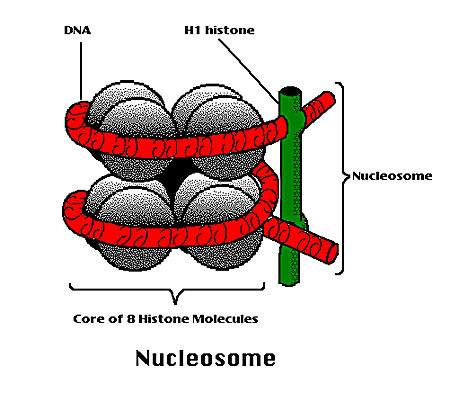
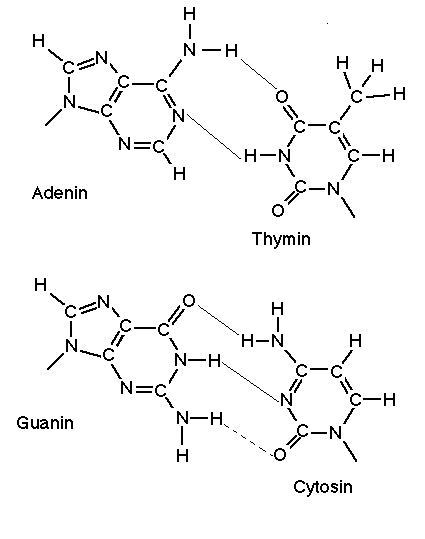
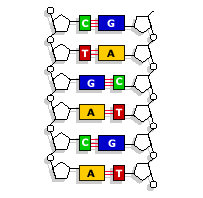
The base sequences of DNA that code for proteins because of how the sequences are arranged on the double helix wrapped tightly within the chromosomes are called genes.
But they are wrapped tightly around histones that package the chromosomal material and only certain proteins can unravel that tightly knotted section of the nucleotide.
These base pair sequences are the actual chemical components of what biologists call, the "genotype."
Evelyn Fox Keller, in The Century of the Gene, refers to this physical and chemical manifestation of order as having "particulate materiality."
Clearly genes, or so Keller argues, are more than codes for making proteins. They are complex expressions (phenotype) of the underlying material (genotype) processes and instructional guidelines mediated by proteins and RNA in the nuclei and cytoplasm of cells.
• Thus the closer we get to observing genes the less clearly they appear.
• For genes are not just pieces that as blueprints, dictate or prescribe the outcome (phenotypic expression of underlying genotype).
"The Unseen Genome: Beyond DNA" genetic vs. epigenetic considerations are discussed here.
Darwin | Dawkins | Keller | Lewontin | Margulis | Mayr | Steingraber | Tattersall | Thomas