 and
and  our world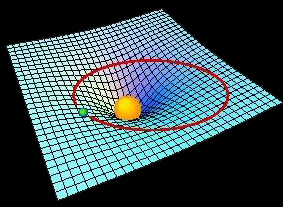

Navigating the site:









"The true art of questioning is to discover what the pupil does know or is capable of knowing."
Only one genius of Einstein's brilliance?
Einstein's life and work
". . . science cannot focus on immediate practical results if it is not to wither away. The insights and methods developed by science serve practical purposes only indirectly and often only for future generations; . . . . If scientific research crumbles, the intellectual life of the nation shuts down, and with it, numerous possibilities for future advancement."
Albert Einstein, "The Plight of German Science: A Danger for the Nation." 21-12-1921. 1
Annus Mirabilis | Universal shift | Special Relativity | General Relativity | Biographical | Social | Epistemological
"To know what is impenetrable to us really exists, manifesting itself as the highest wisdom and the most radiant beauty, which our dull faculties comprehend only in their most primitive forms the knowledge, this feeling, is at the center. . . ."
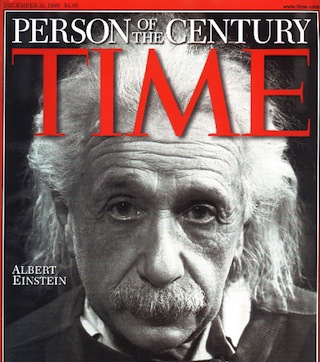 His comments on the scientific method.
Albert Einstein's historical context:
- Just what did he do?
- How do we know he is right?
- Why should we care?
- Who was he?
- Beyond Einstein
- Einstein's legacy
- Kaku on Einstein
Annus Mirabilis 1905, in brief
two parts of science | dialectical method | defining science | Newton | Einstein's context1905, was quite an impressive year for Einstein's publications including:
1. photoelectric connection
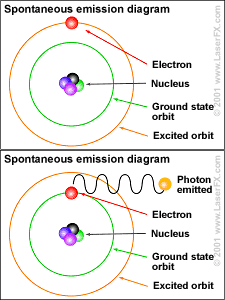
the photoelectric effect where photons generate a flow of electrons, in phosphorus for example means that light (high frequency) & electricity are interchangeable.
2. special relativity & the limitation of the speed of light.
3. molecular (and atomic) movement
4. Brownian Motion (molecules & atoms) as related to heat; the warmer the gas the faster the movement of molecules.
Annus Mirabilis | Universal shift | Special Relativity | General Relativity | Biographical | Social | Epistemological
Einstein the human being, his discoveries and his motives.
Germans emerged from the Holy Roman Empire in 1815 & German unification, 1871.His life span: 1879-1955
born March 14, 1879, Ulm.
1880, moved to Munich, Bavaria.
1894, moved to Milan, Italy.son of a business clerk he was a weak student in grade school
he had mixed experience in the Swiss Federal Polytechnic Institute
self-taught in the electrical engineeringa fine technician
1902, in Zurich, he worked in the Swiss patent office after graduate school
theoretical physicist
His discoveries in two miraculous years (annus mirabilis)
1904-051915, November finished the final versions of his gravitational field equations – the basis of the "general theory of relativity."
Began a lifelong quest for brining relativity and quantum mechanics into a grand unified theory
Died in Princeton, New Jersey on April 19, 1955.
- the relations of atoms & heat or Brownian motion
- electrons and photoelectricity or the photoelectric effect
- acceleration and gravity in “On the Electrodynamics of Moving Bodies;” he described a more precise prediction of a simpler system than Newton’s calculations.
- inductive response to special relativity is general relativity
- revolutionized our concept of the universe with the architecture of space-time
- confirmed two anomalies in observational data:
- 1) bending of light rays as they pass a massive (gravitational field) object &
- 2) indifference of the speed of light to the direction of propagation.
- a lifelong, Ghandian pacifist,
- sought the unified field theory to bring gravity and quantum mechanics together as Maxwell had done for electromagnetism
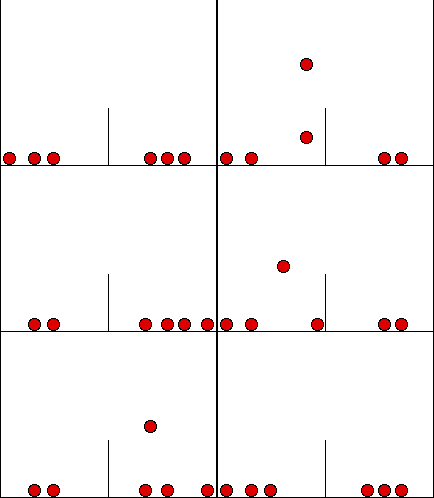
“The laws of nature become simpler at higher dimensions”
(M. Kaku, p. 79)
Motives
Beliefs
the problem of light (electromagnetic spectrum)
scientific procedures
relativity
perception
human ethical obligation
repression
Germany• Gell-Mann and Quarks (subatomic particles)
• Kaku, Beyond Einstein
"the noble building of Euclid's geometry . . . . even the most out-of-the-way proposition of this science to be untrue."
"Euclidean geometry deals with things called 'straight lines,' to each of which is ascribed the property of being uniquely determined by two points situated on it."
(Einstein, 1916, pp. 1-2).
Newton's Euclidean geometry
Einstein's geometry
Newton’s worldview:
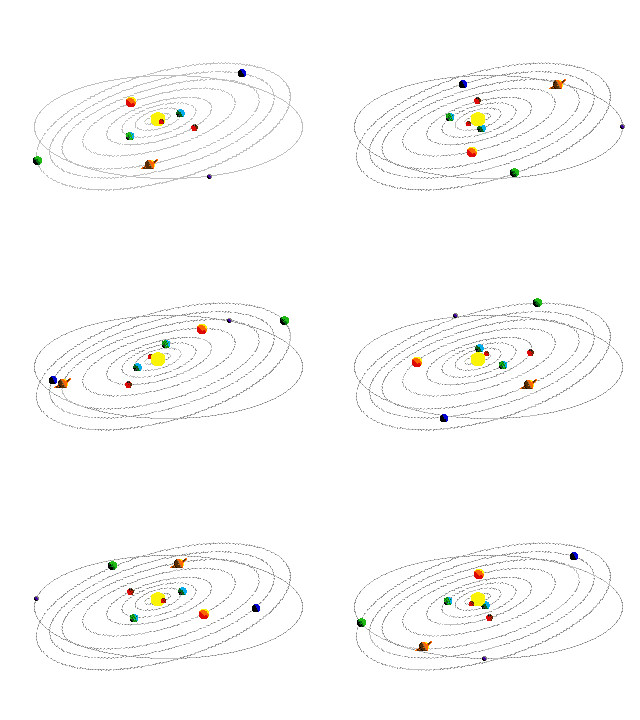
- elliptical orbits of planets and comets around the sun due to gravitational attraction
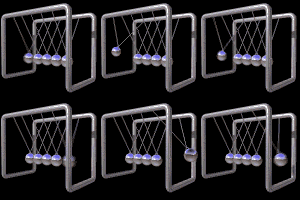
- all mechanical action has equal and opposite reaction
- material world is constant
- incessantly moving matter interacting with moving matter
- small invisible balls, atoms or corpuscles in the ether of space account for reality
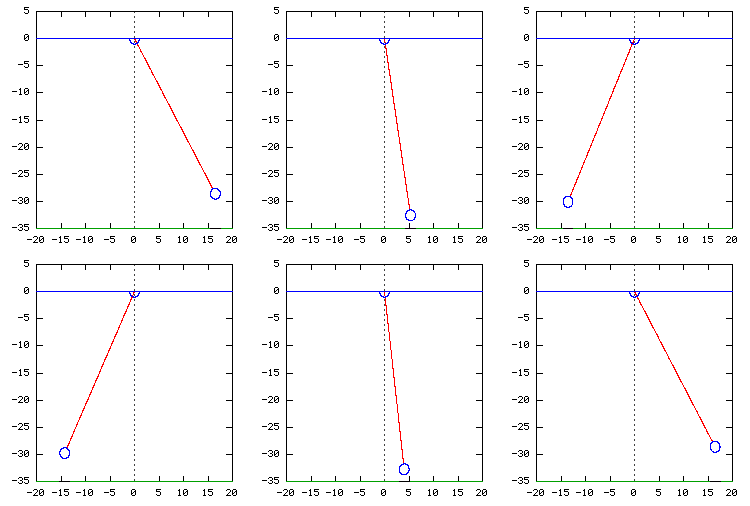
- stationary, flat, or Euclidean geometry adequately measures space
- steadily advancing linearity of time
- Time as a constant, unvarying and universally the same, quality independent of space
- Sir Isaac Newton
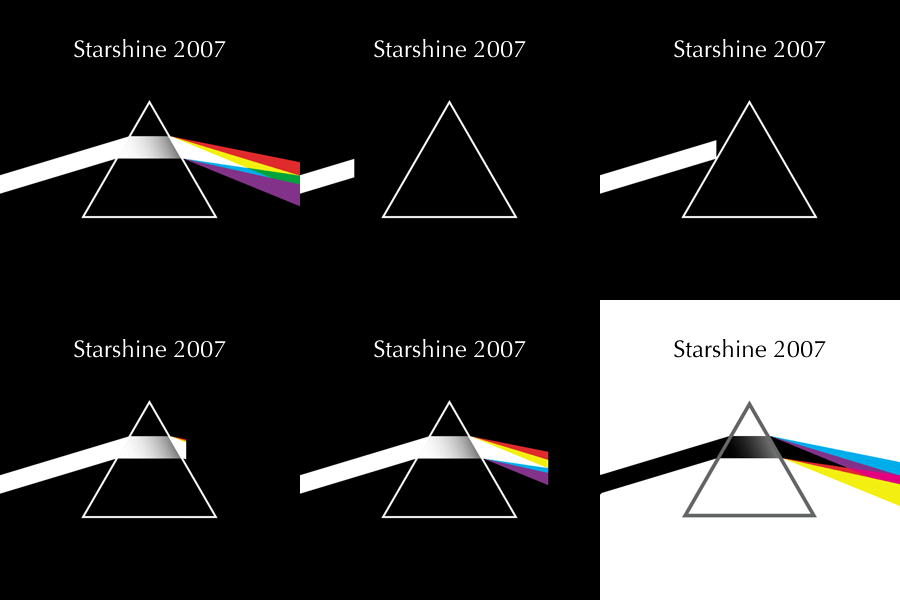
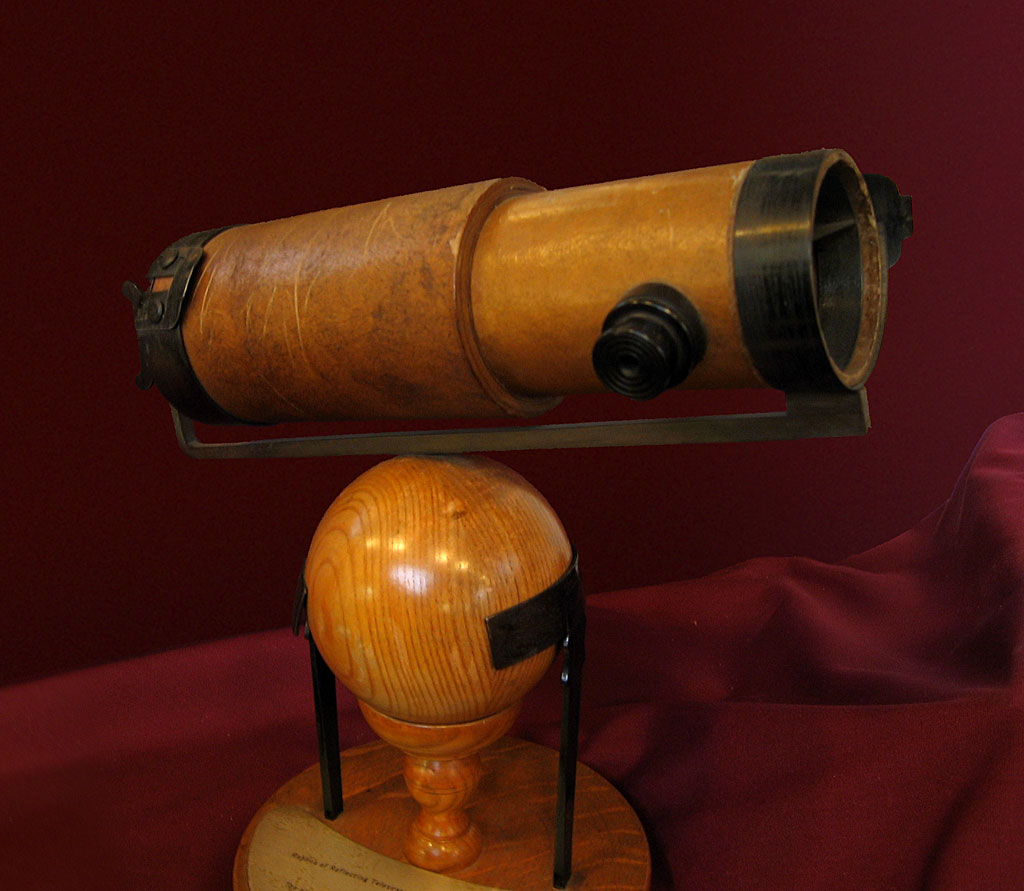
Newton's prism and a replica of his reflecting telescope of 1672.
Newton's inadvertent observational error.

 1. Einstein on Politics. David E. Rowe & Robert Schulmann, eds., Princeton: Princeton University Press, 2007. pp. 90-91.
2. Michio Kaku & Jennifer Thompson. Beyond Einstein, New York: Random House, 1995.
3. David Cassidy. Einstein and Our World, 1995.
4. Thomas Levenson, Einstein in Berlin. New York: Bantam Books, 2003.
5. Abraham Pais, Subtle is the Lord: The Science and life of Albert Einstein. New York: Oxford University Press, 1989.
6. Albert Einstein, Relativity: The Special and General Theory. Robert W. Lawson, trans. New York: Crown Publishers (1916) 1961.
Three ways to understand a scientific certainty.
Galileo Galilei | Murray Gell-Mann | Jacob Bronowski | Stephen Hawking | Karen Horney | Ernst Mayr | Ian Tattersall |Charles Darwin
Science Index | Analysis | Population Index | Global Warming Index | Nature Index | knowledge